Careers

2026 Top Trends in Columbus Chemicals Industry Innovations?

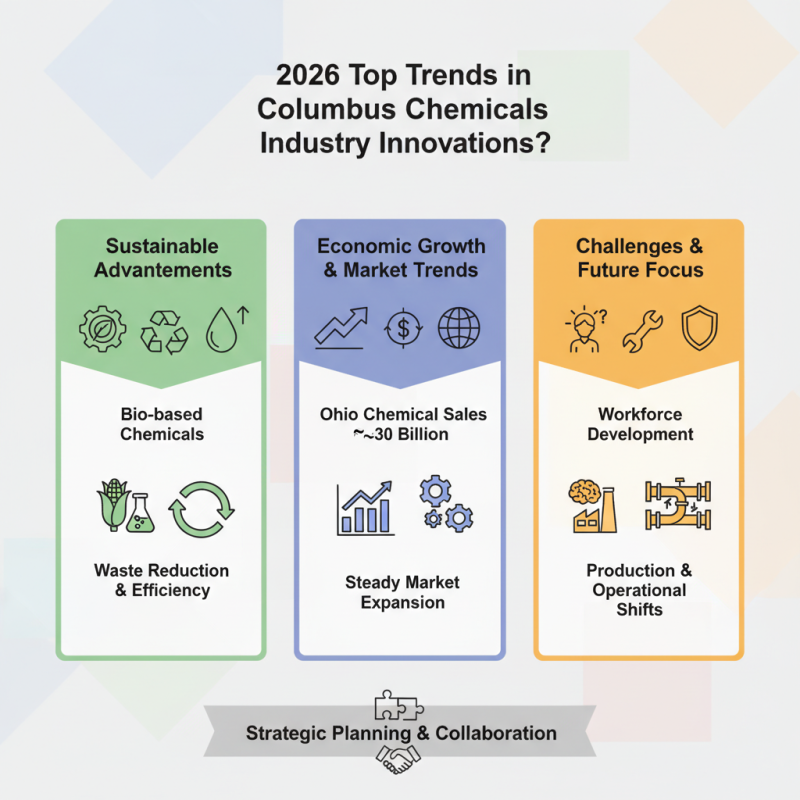
The Columbus chemicals sector is undergoing significant transformations. With innovative advancements and sustainability measures, this industry is steering towards a greener future. According to reports by the National Association of Chemical Distributors, the market is expected to grow steadily, with Ohio’s chemical sales projected to reach around $30 billion by 2026.

Emerging trends in Columbus chemicals include the rise of bio-based chemicals and advanced materials. Companies are focusing on reducing waste and enhancing efficiency. For instance, some local firms are investing in renewable resources to align with environmental standards. However, these changes may lead to challenges in production processes and operational costs that require careful consideration.

Moreover, workforce development poses another challenge. As new technologies emerge, skill gaps become more evident. Training programs must evolve to prepare workers for modern demands. This ongoing evolution highlights the need for ongoing assessment in Columbus chemicals. Embracing these innovations could yield rewards, but only with strategic planning and collaboration among industry stakeholders.
2026 Top Trends in Columbus Chemicals Industry Innovations?

Emerging Sustainable Practices in Columbus Chemicals Industry

The Columbus chemicals industry is experiencing a significant shift toward sustainability. Emerging practices focus on reducing environmental impact while enhancing efficiency. Companies are exploring innovative methods to recycle materials and minimize waste. For instance, some facilities are adopting closed-loop systems that repurpose byproducts. These systems can drastically lower landfill use.

Tips: Always assess your materials. Find out what can be reused. Analyze existing processes for waste reduction. Small changes can lead to big differences.

Additionally, biotechnological advancements play a crucial role. Firms are investing in bio-based chemicals. These alternatives often come from renewable resources, decreasing reliance on fossil fuels. However, the transition isn’t without challenges. Ingredient sourcing can be complex and prices may vary. This unpredictability demands ongoing adjustment.

Tips: Engage with suppliers early. Build relationships that foster collaboration. Explore options for sustainable sourcing as a team. Plan ahead for price fluctuations.

Lastly, community engagement remains essential. Businesses should involve local stakeholders in sustainability efforts. Transparent communication can build trust and drive collaboration. Developing shared goals benefits everyone, but it takes time and effort. Progress may seem slow, but each step towards sustainability counts.
Advancements in Green Chemistry and Eco-Friendly Solutions

2026 Top Trends in Columbus Chemicals Industry Innovations?

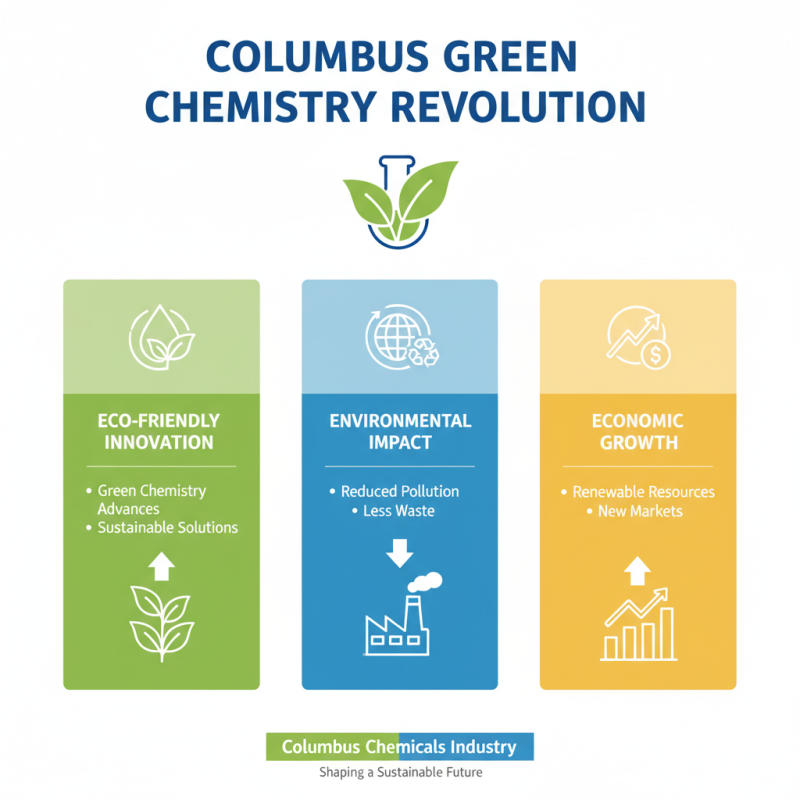
The Columbus chemicals industry is witnessing a significant shift toward eco-friendly innovations. Advancements in green chemistry are shaping the landscape. This push for sustainable solutions improves environmental impact while driving economic growth. Companies are exploring renewable resources and reducing waste in chemical processes.

Many firms are experimenting with biobased materials. These materials often replace traditional petroleum-based products. However, challenges remain in scalability and cost. Some green alternatives might not perform as well or be more expensive initially. It’s essential to balance environmental benefits with practicality.

Research continues into more efficient catalysts and reactions. Innovations are targeted at minimizing harmful byproducts. Yet, the transition can be slow. Education and infrastructure in Columbus need improvement to support these changes. There’s a need for collaboration between industries and local stakeholders. This will foster a stronger commitment to greener practices.

Integration of Artificial Intelligence in Chemical Manufacturing

The integration of artificial intelligence (AI) in chemical manufacturing is transforming the Columbus chemicals industry. In 2022, over 45% of companies reported exploring AI technologies. These tools enhance efficiency and reduce production costs. For instance, AI can predict maintenance needs, lowering downtime by up to 30%. It enables real-time data analysis, optimizing chemical processes.

AI applications are not without challenges. Many companies face difficulties in data integration and quality control. Additionally, workforce training remains a significant hurdle. About 50% of workers feel unprepared to utilize AI effectively. Bridging this skill gap is vital for maximizing AI's potential in a complex industry like chemicals.

Despite the hurdles, the potential of AI offers exciting opportunities. Automation will likely lead to innovative product development. Predictive analytics can help tailor products to market needs faster. In 2025, the AI market in chemicals is projected to reach $5 billion, reflecting a growing trend. Embracing these changes may require companies to reassess strategies regularly. The journey is not perfect, but the insights gained can shape a more efficient future.

2026 Top Trends in Columbus Chemicals Industry Innovations

This chart illustrates the impact level of various technological innovations in the Columbus chemicals industry for the year 2026. The trends include integration of AI, sustainability practices, automation processes, supply chain optimization, and advanced materials development.

Innovative Materials and Their Impact on the Chemicals Sector

2026 Top Trends in Columbus Chemicals Industry Innovations?

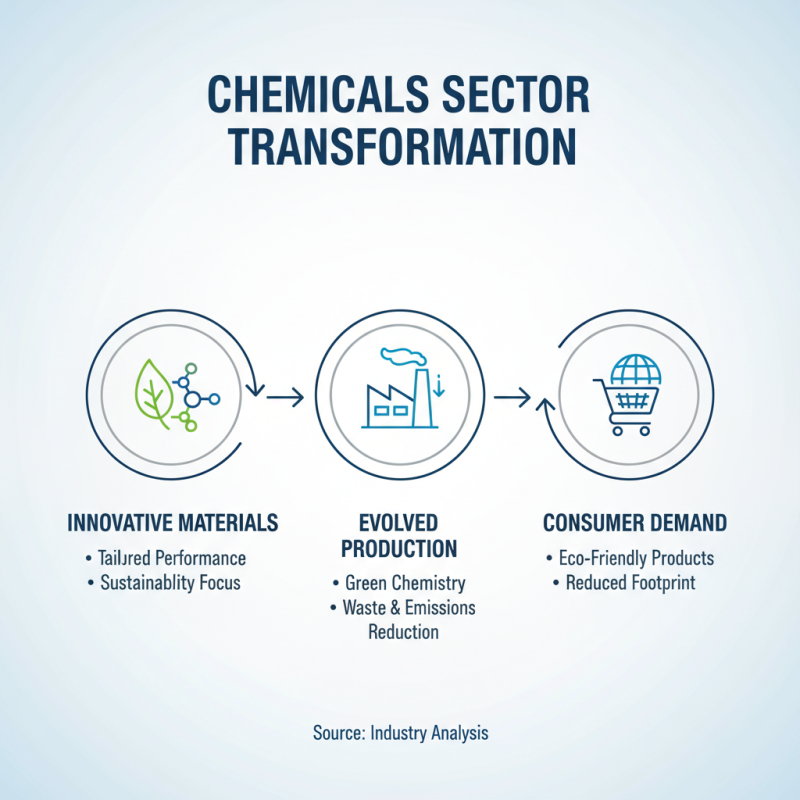
The chemicals sector is undergoing a significant transformation. Innovative materials are at the heart of this change. These materials are tailored for better performance and sustainability, directly impacting production methods. Companies are increasingly adopting green chemistry practices to meet consumer demands. This shift focuses on reducing waste and lowering emissions.

Using advanced composites, businesses are enhancing product durability. For instance, bio-based polymers are gaining traction. Their versatility is appealing across various applications. However, the challenge remains in scaling up production. Not all companies have the resources to transition smoothly. This creates a need for strategic partnerships and investment in research and development.

Tips: Stay informed about new materials. Join industry forums to connect with innovators. Experiment with small-scale changes before larger commitments. Feedback from these initial steps can guide future directions. Engaging in discussions on emerging trends can unveil critical insights. Embrace the mindset of continuous improvement; not all innovations will deliver immediate results.

Regulatory Changes and Their Influence on Industry Innovations

Regulatory changes are shaping the Columbus chemicals industry in significant ways. New environmental regulations are pushing companies to innovate. There is a clear shift towards sustainable practices. For example, the U.S. Environmental Protection Agency (EPA) recently revised its chemical safety guidelines. These changes aim to reduce emissions and promote safer alternatives.

A recent report from the Chemical Industry Association highlighted that 65% of companies are investing heavily in greener technologies. This reflects a broader trend in the industry. Strict regulations create both challenges and opportunities. Companies must adapt quickly, yet some struggle to meet new standards.

In response to these pressures, firms are exploring advanced materials and processes. Biodegradable plastics and renewable solvents are gaining traction. However, transitioning to these solutions is not always smooth. There are costs involved, and some smaller companies face difficulties. They may not have the resources to comply with evolving demands. The ability to innovate while navigating regulations will determine success in the coming years.

2026 Top Trends in Columbus Chemicals Industry Innovations

Trend Description Impact on Industry Regulatory Influence
Green Chemistry Adoption of eco-friendly chemical processes. Reduction in environmental footprint. Regulations encouraging sustainable practices.
Digital Transformation Integration of AI and IoT in manufacturing. Increased efficiency and predictive analytics. Standards promoting technology use in production.
Biodegradable Materials Development of materials that decompose naturally. Enhanced market demand for sustainable products. Increased regulations on plastic use.
Advanced Polymers Innovations in polymer technology for various applications. Improved performance in multiple sectors. Compliance with safety standards for new materials.
Circular Economy Initiatives Focus on recycling and repurposing chemicals. Enhanced resource efficiency and waste reduction. Policies supporting recycling and resource recovery.