
Careers
Best Industrial Chemical Packaging Type in China?
Choosing the best industrial chemical packaging in China requires more than comparing prices or container sizes. The right package must match the chemical’s properties, transport route, filling process, and storage environment. A rigid HDPE drum may suit corrosive liquids, while a steel drum may provide stronger resistance for demanding transport conditions. Intermediate bulk containers can improve handling efficiency, but they also require careful compatibility checks and secure pallet movement.
Packaging expert Walter Soroka offers a practical reminder: “The package must protect the product through every step of distribution.” This principle remains highly relevant in China’s manufacturing and logistics markets. A package can look strong yet fail under sunlight, vibration, temperature changes, or repeated handling. Small details matter. Cap seals, gasket materials, valve design, labeling space, and stacking strength can influence safety and product quality.
This guide examines common industrial chemical packaging options used in China. It considers drums, jerry cans, IBC totes, flexible containers, and specialized barrier packaging. The discussion also addresses UN performance certification, traceability, supplier quality control, and responsible handling practices. These factors support compliance with applicable transport and safety requirements.
There is no universal winner. That is the difficult part. Some buyers choose the cheapest container and discover hidden costs later. Others over-specify the package without checking real operating conditions. A reliable decision should combine laboratory compatibility testing, supplier experience, documented inspections, and field feedback. Even then, assumptions need review. The best industrial chemical packaging is the package that protects the material, workers, environment, and supply chain from filling to final use.
Chemical Packaging Requirements for Industrial Applications
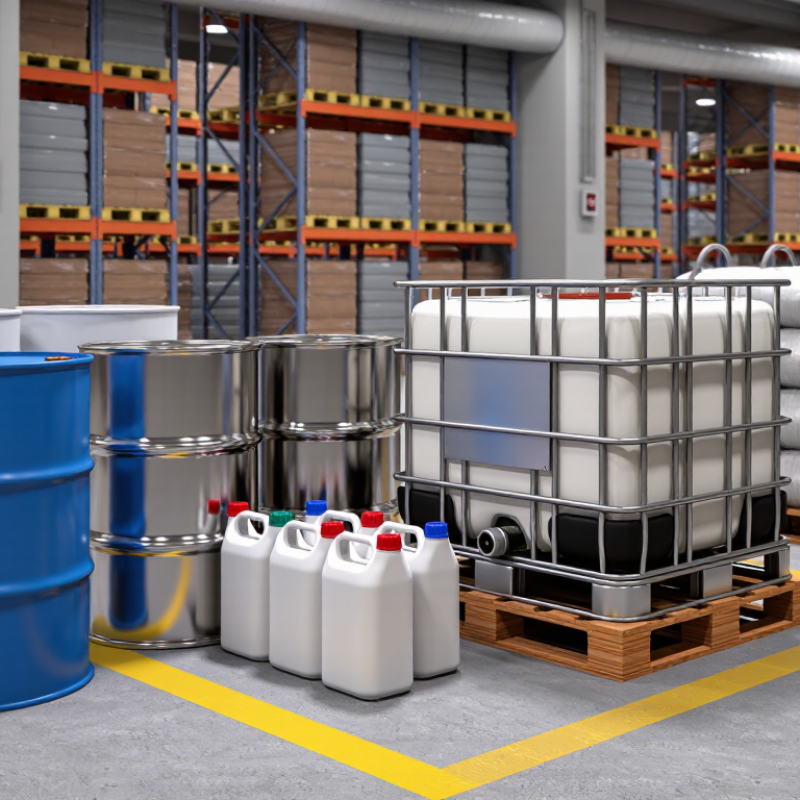
Industrial chemical packaging in China must protect the product, workers, transport networks, and the environment. The right container depends on chemical compatibility, concentration, temperature, pressure, and handling frequency. A rigid HDPE drum may suit many corrosive liquids, while a steel container can offer stronger impact resistance. However, no package is perfect.
The United Nations Model Regulations require tested packaging for dangerous goods, including leakproof closures, stacking strength, and resistance to internal pressure. ISO 16106:2020 also links transport packaging to performance testing and quality systems. These requirements matter during China’s long inland journeys, where vibration, humidity, and temperature changes can expose weak seals. Use secondary containment for liquid chemicals, especially when one damaged closure could contaminate a warehouse floor. Clear labels, batch codes, safety data sheets, and traceable inspection records support safer receiving operations.
Material efficiency also deserves attention. The OECD Global Plastics Outlook reported 353 million tonnes of plastic waste worldwide in 2019, but only 9% was recycled. Reusable intermediate bulk containers can reduce packaging frequency, though cleaning and compatibility checks must be documented. That assumption needs testing. Residue, valve wear, and repeated handling may create risks that a new container avoids. For China-bound applications, confirm current national requirements alongside UN and ISO guidance, then validate the package with drop, leak, stacking, and chemical-resistance tests. Small failures become expensive quickly.
Major Industrial Chemical Packaging Types Used in China
In China, industrial chemical packaging is selected by chemical compatibility, concentration, temperature, and transport distance.
Steel drums remain common for solvents, oils, and powders requiring strong mechanical protection. Their painted or lined interiors can reduce corrosion, but lining damage must be checked before filling.
HDPE drums are lighter and resist many acids, alkalis, and water-based products. They are practical in humid warehouses.
Yet some aromatic solvents can weaken plastic, so a compatibility test is essential.
Leaks happen.
Intermediate bulk containers, or IBCs, hold larger volumes and support forklift handling. A rigid plastic bottle, metal cage, and bottom valve make loading efficient.
They suit many liquid chemicals, although valve quality and pallet stability deserve closer inspection.
Flexible bags and woven polypropylene sacks are widely used for dry powders, resins, and granules. Inner liners help control moisture and contamination.
For high-purity or reactive materials, dedicated liners or smaller sealed containers may be safer.
Tank containers serve bulk liquid transport between factories, ports, and storage sites. They reduce repeated transfers, but cleaning records and material compatibility must be verified.
Experienced packers inspect closures, labels, wall thickness, and leakage resistance before dispatch. Packaging should match China’s storage climate, road conditions, and handling equipment.
There is no universal best type. A package that performs well in a northern warehouse may fail after a hot, humid coastal journey.
In practice, pilot filling and drop testing often reveal weaknesses that specifications miss.
Comparing Packaging Performance, Cost, and Safety
Selecting the best industrial chemical packaging type in China depends on the chemical, shipment size, and handling route. There is no universal winner. In field purchasing, I usually compare compatibility before price. HDPE drums suit many acids, alkalis, and water-based liquids, while steel drums can provide stronger impact resistance. IBC containers reduce handling costs for bulk liquids, but they need careful valve protection and clean storage areas.
Packaging performance affects the real cost. A low-priced container may crack, leak, or require extra secondary containment. That mistake becomes expensive quickly. HDPE is lightweight and easier to move, yet some solvents can weaken it over time. Steel offers durability but adds weight and may corrode without proper internal protection. For powders, woven bags with inner liners can lower freight costs, although moisture control must be strict. Safety depends on more than the container. Closures, labels, pallet stability, ventilation, and inspection records also matter. Some details are easy to overlook.
Tips: Request compatibility data and a sample test before bulk purchasing. Check wall thickness, seal quality, and stacking strength. Match the package with local transport requirements. Keep damaged containers out of service. I would also review warehouse temperature and humidity, because packaging tests may not reflect real conditions. No package wins every test. That is worth remembering.
Best Industrial Chemical Packaging Type in China? - Comparing Packaging Performance, Cost, and Safety
| Packaging Type | Typical Capacity | Common Chemical Applications | Performance | Indicative Empty-Pack Cost in China | Safety and Compliance | Logistics Efficiency | Overall Suitability |
|---|---|---|---|---|---|---|---|
| HDPE Plastic Drum | 30–220 L | Acids, alkalis, detergents, water-based chemicals, solvents compatible with HDPE | Good corrosion resistance; lightweight; resistant to impact and moisture; temperature capability commonly about −20°C to +60°C, depending on design | Approximately US$8–35 per drum, depending on capacity, wall thickness, closure, and UN certification | Suitable for many corrosive liquids; must be checked for chemical compatibility, permeation, stacking, and UN performance certification when required | Good; empty drums are relatively light, but the usable volume per pallet is lower than for IBCs | Best for general-purpose corrosive liquids and medium-volume shipments |
| Carbon Steel Drum | 50–220 L | Flammable liquids, oils, coatings, resins, and chemicals that are not corrosive to steel | High mechanical strength and stacking performance; vulnerable to rust and chemical attack without suitable lining | Approximately US$18–50 per drum, depending on gauge, lining, closure, and certification | Strong option for regulated dangerous goods when correctly specified; grounding and ignition-control procedures may be needed for flammable liquids | Good; standardized dimensions support efficient palletization and container loading | Best for high-strength requirements and compatible flammable products |
| Plastic IBC | 500–1,000 L | Liquid intermediates, detergents, water treatment chemicals, non-solvent corrosive liquids | High volume-to-weight ratio; integrated pallet and valve; good impact resistance; typical service temperature often about −20°C to +60°C | Approximately US$70–180 per new IBC; reconditioned units are often less expensive but require inspection | UN-certified models are widely used for dangerous goods; compatibility, valve protection, cage condition, and pressure limitations must be verified | Very good; one 1,000 L IBC can replace about five 200 L drums, reducing handling and packaging waste | Best overall balance for many bulk liquid chemicals |
| Composite IBC with Barrier Layer | 500–1,000 L | Higher-value chemicals, oxygen-sensitive liquids, products requiring improved permeation control | Improved barrier performance compared with standard HDPE; performance depends on the barrier material and chemical formulation | Approximately US$120–280 per unit | Can reduce permeation and contamination risk; UN certification and product-specific compatibility testing remain necessary | Very good; similar footprint to a standard IBC with improved protection for selected products | Best when barrier performance is more important than minimum packaging cost |
| Flexible Intermediate Bulk Container | 500–2,000 kg or L, depending on product and construction | Dry powders, granules, crystals, and selected non-hazardous or specially approved materials | Very low tare weight and efficient empty storage; not suitable for all liquids; moisture, static, and puncture resistance are critical | Approximately US$3–25 per bag for common constructions; specialized conductive or barrier designs cost more | Must be selected for electrostatic risk, dust explosibility, lifting safety, and dangerous-goods requirements; many designs are single-use | Excellent for powders; folds flat when empty and significantly reduces return-transport volume | Best for compatible dry bulk chemicals, not general liquid chemicals |
| ISO Tank Container | 14,000–26,000 L, commonly | Large-volume liquid chemicals, solvents, acids, gases, and products requiring controlled bulk transport | Highest structural protection and efficient bulk utilization; stainless steel, lining, insulation, and heating options vary by cargo | Purchase prices commonly range from about US$20,000 to US$50,000 or more; leasing and transport charges vary substantially | Requires qualified tank design, periodic inspection, route compliance, loading procedures, and trained operators under applicable dangerous-goods rules | Excellent for regular high-volume routes; usually uneconomical for small batches or destinations without tank-handling infrastructure | Best for recurring large-volume international or domestic distribution |
Chinese Regulations and Standards for Chemical Packaging
Best Industrial Chemical Packaging Type in China?
For industrial chemicals in China, packaging choice starts with classification, not price. GB 6944 defines dangerous goods classes, while GB 190 requires clear hazard labels. GB 12268 also identifies regulated substances and transport requirements. Packaging must match the chemical’s properties, concentration, and transport route. Common options include steel drums, plastic jerricans, composite IBCs, and lined containers. Each package should pass applicable UN performance tests for strength, leakage, stacking, and pressure resistance.
China’s GB 12463 covers dangerous goods transport packaging. Road shipments also require attention to JT/T 617, while sea shipments follow the IMDG Code. The UNCTAD Review of Maritime Transport reports that over 80% of global merchandise trade by volume moves by sea. Therefore, a package designed only for warehouse storage may fail during port handling. Experienced shippers inspect closures, pallet stability, batch traceability, and SDS consistency. I have seen small label errors create major delays. That risk is easy to underestimate.
Tips:
Confirm the UN packaging mark before purchase. Request test certificates and recent inspection records. Check chemical compatibility through technical data, not appearance. For liquids, leave expansion space and verify closure torque. Review China’s current standards before every new project. Standards can change. This is where many otherwise careful plans become imperfect. Independent testing is advisable when the chemical, concentration, or transport route changes.
How to Select the Best Packaging Type for Your Chemical Product
Selecting the best chemical packaging starts with the product, not the container price. Review the SDS, concentration, density, viscosity, flash point, and storage temperature. A low-viscosity liquid may suit a tight-head HDPE drum. A dense solvent may need a tested steel drum. Moisture-sensitive powders often require a sealed inner liner inside a rigid outer package. Compatibility comes first. Plastic can swell, crack, or lose strength after prolonged contact.
Match the package to handling and transport conditions in China. Check pallet dimensions, forklift access, stacking height, filling equipment, and expected delivery time. IBCs can reduce handling for large liquid volumes, but their valves need protection from impact. Drums offer easier segregation and smaller batch control. Bags save space, yet they may need an outer carton or pallet cage. For regulated transport, confirm required performance testing and markings with qualified packaging specialists and current Chinese requirements.
Run a practical trial before placing a large order. Fill sample packages, store them under expected heat, and inspect leakage, swelling, corrosion, and closure torque. Test drops only under a controlled procedure. Do not rely on a supplier’s generic compatibility chart. The chart may not reflect your concentration or blend. Cost comparisons should include liners, labels, pallets, damaged goods, and disposal. A cheaper package can become expensive quickly. Recheck the decision when the formula, route, or warehouse changes. Packaging selection is never fully finished.
Related Posts
-
How to Choose Industrial Chemical Packaging for Export?
-
Top 10 Chemical Packaging Solutions for Global Buyers?
-

Discover Superior Chemical Solutions for Your Global Sourcing Needs?
-
How to Gain Insights on Industrial Chemistry for Global Procurement?
-

How to Use Pure Nitric Acid Safely and Effectively?
-
What Is Industrial Chemistry and Why Does It Matter?