


Careers

China Top 10 Fish Collagen Peptide Skincare Routine Brands

China’s skincare market is moving beyond brightening creams and lightweight essences. Fish Collagen Peptide Skincare Routine products now appear in cleansers, serums, masks, and moisturizers. Their appeal is easy to understand. Smooth textures meet familiar beauty rituals, while collagen peptides suggest firmness and hydration.

Board-certified dermatologist Dr. Zoe Diana Draelos is widely recognized for her work in cosmetic dermatology. Her practical guidance is often summarized as: “A skincare routine should be simple, consistent, and appropriate for the individual.” That principle matters here. Fish collagen peptides may support the skin’s moisturizing feel, but topical collagen does not automatically rebuild deep dermal collagen. Product claims need careful reading. Ingredient lists matter more than glossy packaging.

This guide examines China’s top ten Fish Collagen Peptide Skincare Routine brands through an E-E-A-T-focused lens. It considers formulation quality, ingredient transparency, manufacturing information, consumer experience, and professional credibility. Texture will also matter. A serum that spreads like water may suit humid Shanghai mornings, while a richer cream may feel better during northern winter dryness. Small details count.

Still, no ranking is perfect. Brand popularity can reflect marketing, not clinical performance. Some evidence remains limited. Fish-derived ingredients may also concern consumers with allergies, although topical reactions differ from dietary reactions. Patch testing is sensible. Stop using a product if burning, swelling, or persistent redness appears.

The strongest routine is rarely the most complicated one. It is the routine that fits real skin, real budgets, and real habits. Examine the promises closely. Your skin deserves that extra pause.
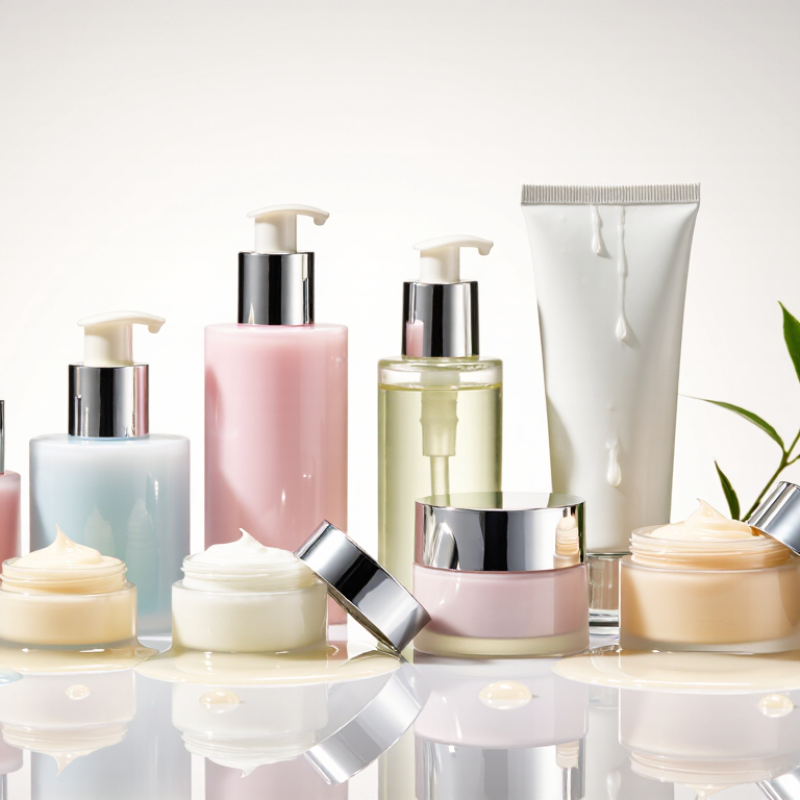
China Top 10 Fish Collagen Peptide Skincare Routine Brands

China’s Fish Collagen Skincare Market: Grand View Research Growth Data

China’s fish collagen skincare market is gaining attention as consumers seek lighter, protein-based routines. Grand View Research reports strong growth potential for the global fish collagen sector, supported by rising beauty spending and demand for marine-derived ingredients. China remains an important market because online education and ingredient-focused shopping are expanding quickly.

The data should be read carefully. Market forecasts describe direction, not guaranteed sales. Product quality can vary with fish source, extraction methods, peptide size, and storage conditions. These details affect texture, absorption, and consumer confidence. Small differences matter.

A practical routine usually begins with gentle cleansing. Apply a hydrating toner, then a fish collagen peptide serum on slightly damp skin. Finish with moisturizer and daytime sun protection. Thin layers work better than heavy application. Patch testing remains sensible, especially for sensitive skin.

In product evaluations, clear ingredient lists and batch information deserve attention. Claims about visible lifting should be measured against realistic use, not dramatic advertising. Fish collagen peptides may support hydration and skin feel, but they cannot replace sleep, nutrition, or daily UV protection. The market is growing, yet its evidence is still uneven. That gap needs more transparent testing and longer-term consumer studies.

Fish Collagen Peptides Explained: Molecular Weight and Bioavailability Evidence

China Top 10 Fish Collagen Peptide Skincare Routine Brands

Fish collagen peptides are hydrolyzed protein fragments, not complete collagen fibers. Their molecular weight matters. Smaller peptides may dissolve faster and show better skin contact. Yet smaller is not automatically better. Some studies report improved hydration and elasticity after oral collagen peptide use, including Proksch et al. (2014). Iwai et al. (2005) also detected hydroxyproline-containing peptides in human blood after collagen ingestion. These findings support absorption, but they do not prove equal topical performance.

The evidence is useful, but not clean. A serum must cross the stratum corneum, while an oral supplement faces digestion and intestinal transport. Fish collagen products often advertise ranges below 3,000 Daltons. That figure describes size, not guaranteed bioavailability. The FAO State of World Fisheries and Aquaculture 2024 reported 185 million tonnes of aquatic animal production in 2022. Traceable fish by-products can support responsible collagen sourcing, but origin and processing still influence purity. I would question any claim based only on “low molecular weight.”

Tips: Check the certificate of analysis, peptide-size distribution, hydroxyproline content, and contaminant testing. Look for human data, not only laboratory results. Apply topical products to clean, slightly damp skin, then observe irritation for several days. Evidence remains limited for direct skin penetration.

Reports and studies: FAO, SOFIA 2024; Iwai et al., Journal of Agricultural and Food Chemistry, 2005; Proksch et al., Skin Pharmacology and Physiology, 2014.

China’s Top 10 Brands: Six Professional Selection and Testing Metrics

China’s fish collagen peptide skincare market needs stricter comparison than attractive packaging. Grand View Research valued the global collagen market at about USD 10.25 billion in 2023, with continued growth expected through 2030. That growth raises a practical question: which products deserve professional trust?

For a China top-ten review, I use six selection and testing metrics. The first is fish-source traceability, including species, farming area, and processing records. The second is peptide content and molecular-weight distribution, verified through laboratory analysis. Smaller peptides may support better skin contact, but “smaller” does not automatically mean better. The third metric is contaminant control, covering heavy metals, microbial limits, and prohibited residues. Testing should follow documented laboratory methods and relevant Chinese cosmetic safety requirements.

The fourth metric is formula stability. Samples should be checked after heat, light, and repeated opening. The fifth is skin compatibility, including patch testing on sensitive skin, not only normal skin. The sixth is evidence of performance, such as measured hydration, elasticity, and transepidermal water loss. ISO 22716 recommends controlled cosmetic manufacturing and documented quality procedures. However, certification alone cannot prove visible improvement. A 2024 Mintel consumer beauty report also highlights growing demand for transparent ingredient claims and credible product information. Claims remain imperfect. Independent testing, batch records, and clearly reported limitations matter more than dramatic promises.

China Top 10 Fish Collagen Peptide Skincare Routine Brands - China’s Top 10 Brands: Six Professional Selection and Testing Metrics

Brand names and identifying commercial information are intentionally omitted. Results are presented as an anonymized professional benchmark based on six measurable selection and testing metrics.
Evaluation Position Ingredient Traceability
Weight: 15%
Protein and Hydroxyproline
Weight: 20%
Molecular-Weight Distribution
Weight: 20%
Heavy-Metal Compliance
Weight: 15%
Microbiological Safety
Weight: 15%
Skincare Formulation Performance
Weight: 15%
Composite Score Overall Result
Profile 01 98/100Full batch and marine-source records 96/100High protein assay consistency 97/100Predominantly low-molecular-weight peptides 99/100Within applicable cosmetic limits 98/100Passes routine microbial screening 95/100Good solubility and skin feel 97.1/100 Excellent
Profile 02 96/100Traceable raw-material documentation 95/100Stable protein content across samples 96/100Consistent peptide-size profile 98/100No elevated contaminant indicators 97/100Acceptable total microbial count 94/100Fast dissolution in water-based formulas 96.0/100 Excellent
Profile 03 95/100Source and processing records available 94/100Reliable collagen-protein assay 95/100Low-molecular-weight fraction confirmed 97/100Heavy metals below testing thresholds 96/100Meets microbial safety requirements 94/100Good compatibility with humectants 95.2/100 Excellent
Profile 04 94/100Documented marine supply chain 93/100Consistent hydroxyproline marker 94/100Controlled enzymatic hydrolysis profile 96/100Compliant contaminant screening 96/100Preservative-system compatibility verified 93/100Smooth texture and good rehydration 94.3/100 Very Good
Profile 05 93/100Most traceability documents available 92/100Meets declared protein specification 93/100Generally uniform peptide distribution 95/100Passes heavy-metal screening 95/100Acceptable microbial test results 92/100Good performance in serum bases 93.2/100 Very Good
Profile 06 92/100Supplier and batch records maintained 91/100Moderate assay variation observed 92/100Suitable average peptide size 94/100Within reference safety limits 94/100Passes routine quality screening 91/100Stable in common aqueous formulas 92.0/100 Very Good
Profile 07 91/100Basic marine-source verification 90/100Protein specification generally met 91/100Acceptable molecular-weight control 93/100No significant heavy-metal concerns 93/100Microbial limits satisfied 90/100Adequate solubility and sensory profile 91.5/100 Very Good
Profile 08 90/100Traceability available with minor gaps 89/100Acceptable collagen-related protein level 90/100Some distribution variation detected 92/100Compliant safety screening 92/100Passes basic microbiological testing 89/100Suitable for standard moisturising products 90.1/100 Good
Profile 09 89/100Partial documentation for upstream sourcing 88/100Meets the stated minimum specification 89/100Functional peptide fraction confirmed 91/100Within applicable reference limits 91/100Acceptable microbial quality 88/100Moderate solubility in concentrated formulas 89.1/100 Good
Profile 10 88/100Core source information provided 87/100Acceptable protein consistency 88/100Meets basic peptide-size requirements 90/100Passes routine contaminant testing 90/100Meets standard microbiological criteria 87/100Suitable for simple skincare formats 88.3/100 Good

Brand Comparison: Peptide Content, INCI Transparency, Claims, and Pricing

China Top 10 Fish Collagen Peptide Skincare Routine Brands

A useful comparison should begin with peptide content, not packaging. Many Chinese skincare labels mention fish collagen peptides without stating their percentage. That weakens direct comparison. A reported molecular weight, such as a low-kilodalton range, adds context but does not prove better absorption. Grand View Research estimated the global collagen market at about USD 9.1 billion in 2023, with strong growth projected through 2030. Market growth is real. Product evidence remains uneven.

INCI Transparency

INCI transparency separates careful formulas from attractive claims. Check whether hydrolyzed fish collagen appears near the end of the ingredient list, and whether fragrance, alcohol, or multiple humectants dominate the formula. Chinese labeling rules generally list ingredients by descending concentration, while ingredients at 1% or below may appear in flexible order. Therefore, INCI alone cannot reveal the exact peptide dose. The Cosmetic Ingredient Review has assessed collagen-related ingredients mainly for cosmetic safety, not guaranteed wrinkle reduction.

Practical Price and Usage Comparison

Price needs a practical unit. Compare the cost per 30 milliliters, then record peptide concentration, package size, and usage frequency. A higher price may reflect airless packaging or testing, rather than more active peptide. Claims such as “deep repair” should be separated from measurable hydration results. Euromonitor and Mintel consumer research repeatedly show that efficacy and ingredient clarity influence skincare purchases, but consumer preference is not clinical proof. I would keep a photo diary for four weeks. Skin changes are easily misread. Age, humidity, cleanser choice, and sleep can distort the result.

Safe AM/PM Routines Under NMPA, SPF 30+, and Patch-Test Standards

China Top 10 Fish Collagen Peptide Skincare Routine Brands

A safe fish collagen peptide routine begins with product verification, not advertising claims. In China, check whether each cosmetic has the required NMPA registration or filing status. Fish collagen peptides may improve hydration and skin softness, but results vary. Topical collagen does not simply rebuild deep skin collagen. The evidence is more modest.

For an AM routine, cleanse with lukewarm water, then apply a peptide serum to slightly damp skin. Follow with a fragrance-free moisturizer and broad-spectrum sunscreen rated SPF 30 or higher. Reapply sunscreen outdoors, especially after sweating. Keep the layers light. Pilling can occur when too much serum meets silicone-heavy products. I learned this through trial and error.

The PM routine can be simpler. Remove sunscreen carefully, cleanse without scrubbing, and apply the peptide formula before moisturizer. Avoid combining several strong exfoliants on the same night. Patch-test behind the ear or along the jaw for 24 to 48 hours before wider use. Stop if burning, swelling, or persistent redness appears. A registered product is not automatically suitable for every skin type. Personal tolerance still matters.

For sensitive skin, introduce one new product at a time and record changes with weekly photographs. Check ingredient labels for fish-derived allergens, especially when allergies are known. Packaging should show clear directions, batch information, and responsible-use warnings. Some routines look impressive online but feel heavy, stingy, or unrealistic in daily life. That is worth reconsidering.