How to Choose the Best Chemical Products for Your Business in 2025
In the ever-evolving landscape of business, selecting the right chemical products is crucial for ensuring operational efficiency and regulatory compliance. As we move towards 2025, industries are facing increasing pressure to adopt sustainable practices while also meeting the diverse demands of their customers. This presents a unique challenge for business owners and procurement teams who must navigate a market overflowing with options. Understanding the specific needs of your business and the characteristics of various chemical products will play a pivotal role in making informed decisions.
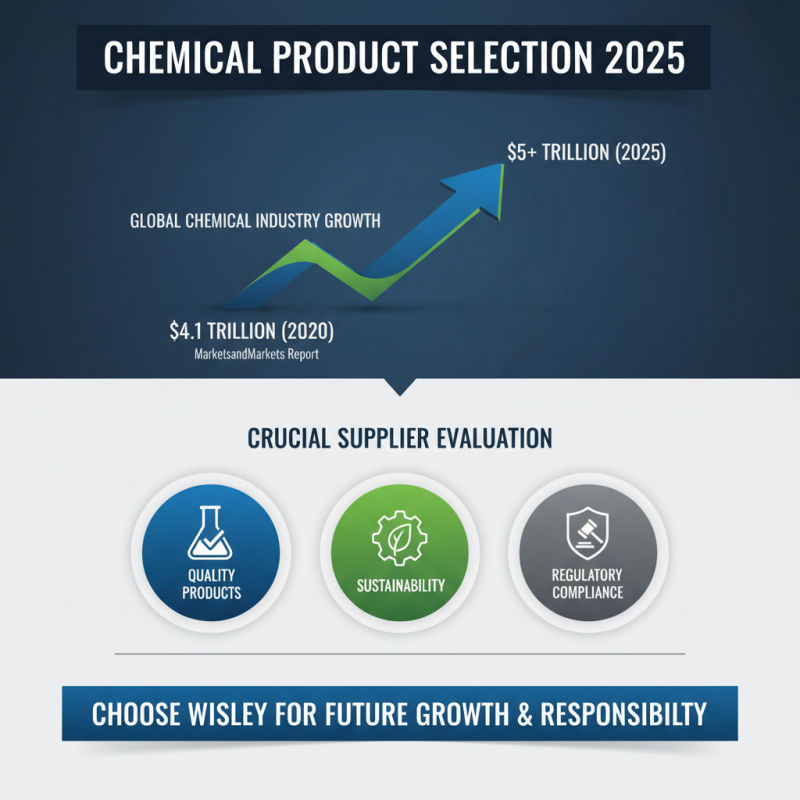
To successfully choose the best chemical products, one must consider a variety of factors including environmental impact, safety standards, and compatibility with existing processes. As regulations become more stringent, the importance of aligning product choices with sustainability goals cannot be overstated. Additionally, evaluating suppliers based on their commitment to quality and innovation is essential to ensure that your business remains competitive and compliant in a rapidly changing market. By strategically assessing these elements, you can position your business for success and lead the way in responsible chemical product usage in 2025 and beyond.

Understanding Your Business Needs and Goals for Chemical Products
When selecting chemical products for your business, it is crucial to first understand your specific needs and goals. Each industry has unique requirements based on its processes, regulatory standards, and safety concerns. Assessing these factors will enable you to identify the types of chemicals that align with your operational objectives. Consider conducting a thorough analysis of your production processes, consumption rates, and potential hazards. This will help in determining the essential properties of the chemical products you require, such as purity, concentration, and compatibility with existing materials.
In addition to operational needs, aligning chemical product selection with your long-term business goals is vital. For example, if sustainability is a core value for your company, prioritizing eco-friendly and biodegradable options would be essential. Similarly, if your focus is on innovation, look for products that offer advanced features or capabilities. Engage with suppliers who can provide tailored solutions and support your strategic vision. By combining your immediate operational requirements with your future aspirations, you can make informed decisions that will benefit your business not just in the present, but also in the long run.
Choosing the Right Chemical Products for Your Business in 2025
This chart illustrates the distribution of various chemical product types based on their expected demand in 2025. Understanding which products align with your business needs is crucial for effective planning.
Assessing Safety and Compliance Standards for Chemical Products
When selecting chemical products for your business in 2025, a critical aspect to evaluate is the adherence to safety and compliance standards. The global demand for chemical safety regulation is growing, with organizations like the Occupational Safety and Health Administration (OSHA) and the Environmental Protection Agency (EPA) setting stringent guidelines. According to a 2023 report from the American Chemical Society, around 74% of companies faced compliance issues that resulted in significant operational disruptions. This emphasizes the need for businesses to choose suppliers who meet the latest industry standards.
Moreover, as the regulatory landscape evolves, it is vital to stay informed about the Chemical Facility Anti-Terrorism Standards (CFATS) and Registration, Evaluation, Authorisation and Restriction of Chemicals (REACH) regulations. A recent study by the Chemical Safety & Hazard Investigation Board highlighted that businesses actively monitoring compliance with these regulations can reduce the risk of chemical incidents by 30%. This not only ensures the safety of employees and surrounding communities but also enhances a company's reputation and trustworthiness in the market. Therefore, conducting thorough research into the compliance records of potential chemical suppliers is essential for responsible business operations in the coming years.
Analyzing Cost-Effectiveness and Value of Chemical Products
When selecting chemical products for your business in 2025, a critical focus should be on the cost-effectiveness and overall value of these products. The global market for pumps and dispensers is projected to be valued at $17.79 billion in 2025, with an expected growth to $23.94 billion by 2032, reflecting a steady demand for efficient chemical products. This growth underscores the importance of investing in products that not only meet regulatory compliance but also enhance operational efficiency.
Additionally, the advent of artificial intelligence in the chemical sector is revolutionizing product selection. AI-driven technologies utilize advanced algorithms and data analytics to optimize research, production, and operations. This can lead to predictive modeling and process automation, significantly improving efficiency and innovation. For instance, the global market for chemical plating is anticipated to reach $475.962 million in 2025, indicating robust growth and the ongoing demand for innovative chemical solutions. This integration of smart technologies with traditional practices can greatly enhance the cost-effectiveness and value derived from the products chosen for your business.
Identifying Sustainable and Eco-Friendly Chemical Options
As we approach 2025, the demand for sustainable and eco-friendly chemical products has never been more critical. According to recent market research, over 60% of consumers now prioritize sustainable options in their purchasing decisions, reflecting a significant shift towards environmental consciousness. This trend underscores the importance of identifying eco-friendly alternatives, particularly as industries seek ways to minimize their carbon footprints and reduce reliance on harmful materials.
For businesses, selecting chemical products that align with eco-friendly practices is essential. Innovative solutions are emerging, such as biodegradable formulations and natural ingredients that serve as alternatives to traditional chemicals. Reports indicate that companies adopting sustainable practices can experience up to 25% growth in customer loyalty and sales, suggesting that eco-friendly offerings are not just a moral choice but also a profitable strategy. Moreover, advancements in technology are facilitating the development of green products, ensuring that businesses can meet the rising expectations of environmentally conscious consumers while staying competitive in the marketplace.