What Are High Purity Chemicals and Their Uses in Industry?
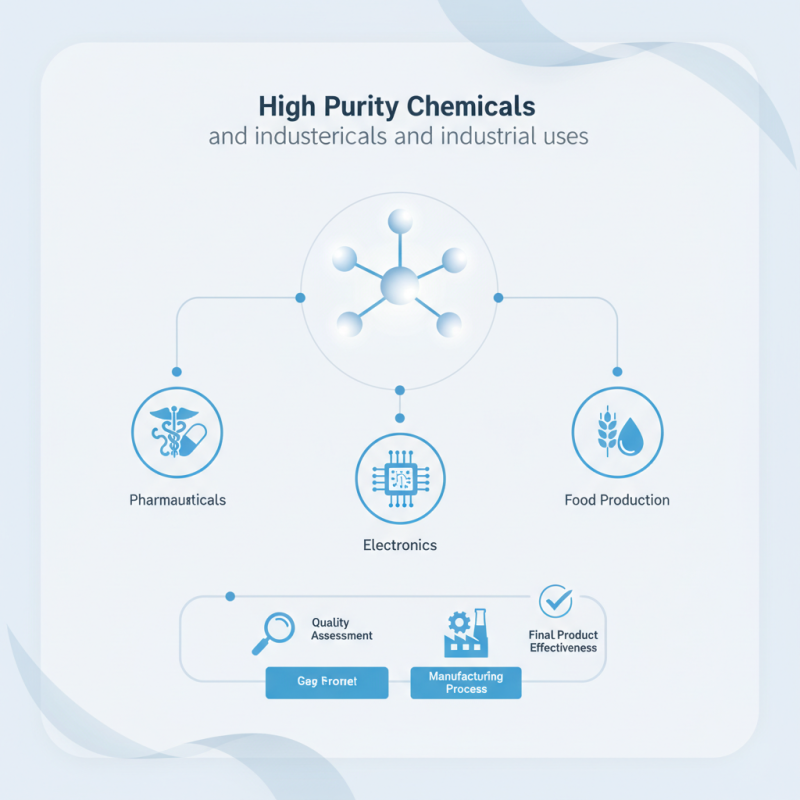
High purity chemicals play a vital role in various industries. They are essential for manufacturing processes that require precise chemical compositions. These chemicals are characterized by their exceptional quality, with minimal impurities. Industries such as pharmaceuticals, electronics, and food production depend heavily on these substances.
In the pharmaceutical sector, high purity chemicals ensure the efficacy and safety of drugs. Pharmaceutical companies must comply with strict regulatory standards. This makes the quality of chemicals critical for patient health. Similarly, in electronics, these chemicals are used to create components that operate efficiently. Impurities can lead to product failures.
Manufacturers must be cautious when sourcing high purity chemicals. The market has its challenges. Not all suppliers maintain the same standards. It’s essential to evaluate the reliability of suppliers. A thorough understanding of chemical purity can prevent costly mistakes. Proper quality assessments are necessary to ensure the effectiveness of final products.
Definition of High Purity Chemicals and Their Characteristics
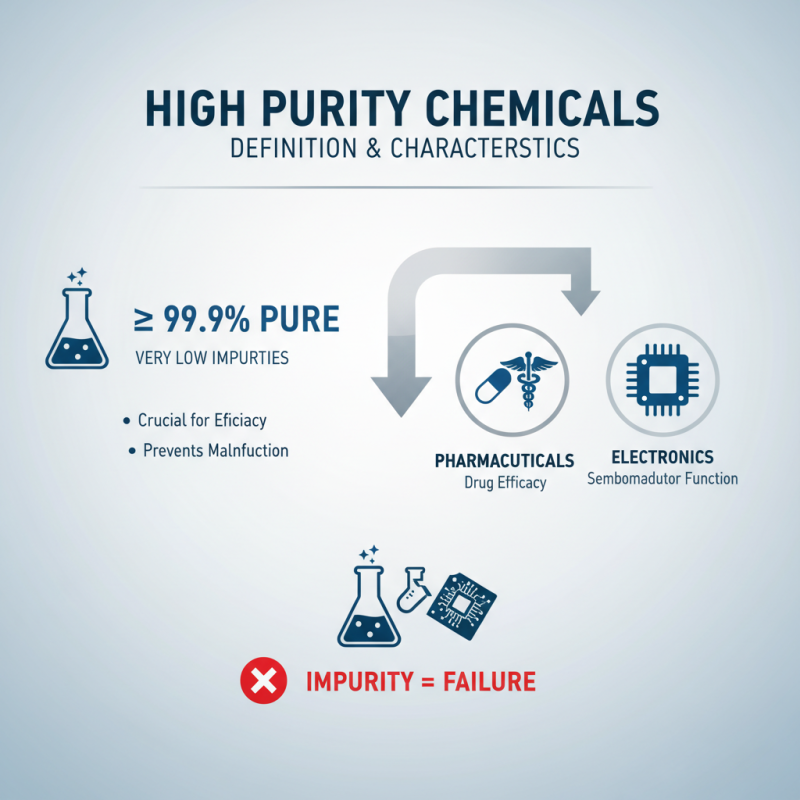
High purity chemicals are substances with very low levels of impurities. These chemicals can reach purity levels of 99.9% or higher. The high purity standard is crucial in various industries, especially in pharmaceuticals and electronics. For instance, a slight impurity can undermine the efficacy of a drug or disrupt the function of a semiconductor.
The characteristics that define high purity chemicals include stringent manufacturing processes and rigorous quality control. These products often undergo multiple purification steps to eliminate contaminants. Furthermore, they are typically produced in controlled environments. However, despite advanced techniques, achieving absolute purity remains a challenge. Even minor variations can impact performance and safety.
Industries heavily rely on these chemicals for innovation. Pharmaceutical companies depend on high purity compounds to ensure drug safety and effectiveness. Similarly, electronics manufacturers need these materials to maintain product reliability. The demand for high purity chemicals continues to grow. Yet, it brings attention to the delicate balance required in production. The quest for purity often requires careful monitoring and adjustment throughout the process.
Importance of High Purity in Various Industrial Applications
High purity chemicals are essential in numerous industries. Their significance cannot be overstated, particularly in sectors like pharmaceuticals, electronics, and food processing. In pharmaceuticals, for instance, high purity chemicals ensure the safety and efficacy of drugs. Even minor impurities can lead to serious health risks, emphasizing the need for strict quality control.
In electronics, pure chemicals play a critical role in manufacturing semiconductors. Impurities can affect the performance of electronic devices, leading to failures. Thus, top-tier companies prioritize sourcing high purity materials to maintain product integrity. As technology advances, the demand for higher purity levels increases, posing a challenge for manufacturers.
Tips: Always verify the supplier’s certifications. This can prevent costly production errors. Regular audits can also help ensure that the purity levels meet industry standards. Investing in quality assurance processes pays off by reducing waste and enhancing product reliability. Remember, imperfections in purity can lead to unforeseen complications in production and end-user satisfaction.
What Are High Purity Chemicals and Their Uses in Industry?
| Chemical Type |
Purity Level (%) |
Common Uses |
Industry Application |
| Acetic Acid |
99.9% |
Solvent in chemical synthesis, food preservative |
Pharmaceutical, Food and Beverage |
| Hydrochloric Acid |
99.5% |
pH adjustment, metal cleaning |
Metal Processing, Chemical Manufacturing |
| Sodium Chloride |
99.9% |
Food seasoning, preservation |
Food Industry, Chemical Production |
| Nitric Acid |
99.0% |
Fertilizer production, explosives manufacturing |
Agriculture, Explosives |
| Sulfuric Acid |
98.0% |
Battery acid, pharmaceuticals, and oil refining |
Energy, Automotive, Chemical |
Common Types of High Purity Chemicals Used in Industry
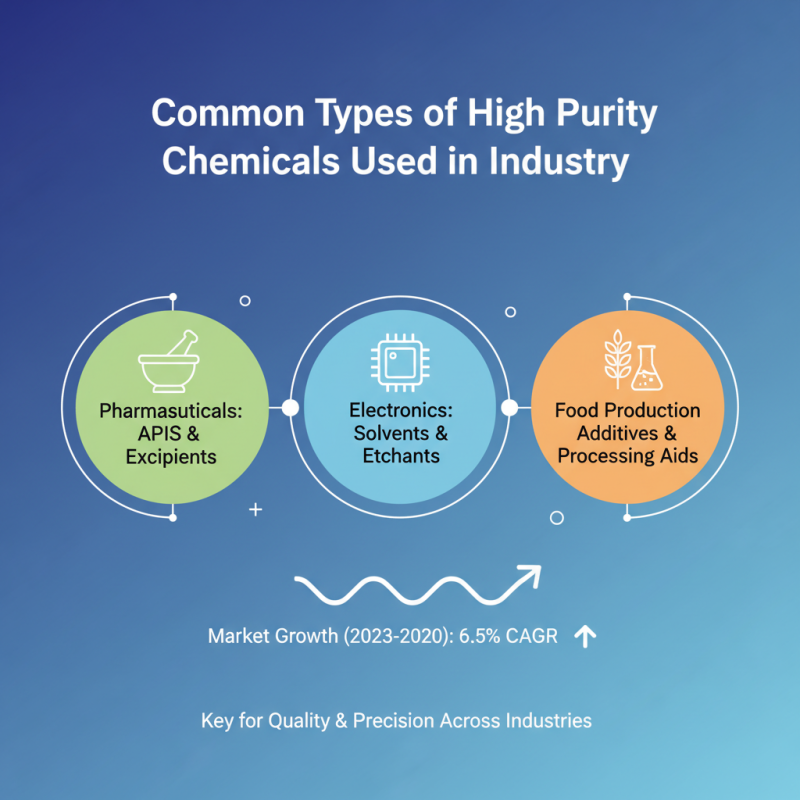
High purity chemicals play a crucial role in various industries. These chemicals are defined by their minimal impurities and stringent manufacturing processes. They are essential in fields such as pharmaceuticals, electronics, and food production. According to industry reports, the global high purity chemicals market is projected to grow at a CAGR of 6.5% from 2023 to 2030. This highlights the increasing demand for quality and precision in industrial applications.
Common types of high purity chemicals include acids, solvents, and gases. For instance, high purity water is vital in the pharmaceutical industry. It's required for production processes and formulation. Additionally, electronic-grade chemicals, such as high purity nitrogen, are crucial for semiconductor manufacturing. A report from the Semiconductor Industry Association indicates that supply chain disruptions can impact these high purity chemicals, emphasizing their significance.
Despite their importance, the production of high purity chemicals is not without challenges. Maintaining stringent quality controls can be resource-intensive. Moreover, emerging regulations require ongoing adjustments to manufacturing practices. Industries must balance cost and compliance while ensuring product integrity. These factors make the sector dynamic and require continuous reevaluation of best practices.
Methods for Producing and Testing High Purity Chemicals
High purity chemicals are essential in many industries, including pharmaceuticals and electronics. Their production requires precise methods to ensure minimal impurities. Researchers and manufacturers focus on several key techniques to achieve high purity levels.
One common method is crystallization. This involves dissolving a chemical in a solvent and then cooling it to form crystals. Impurities typically remain in the solution. Repeating this process can enhance purity, but it demands careful control of temperature and concentration.
Another approach is distillation, which separates components based on boiling points. While effective, this method can be energy-intensive and may not always yield highly pure substances.
Testing is crucial in ensuring the quality of high purity chemicals. Techniques like High-Performance Liquid Chromatography (HPLC) are widely used. HPLC allows for the separation and analysis of compounds, providing insight into their purity. Often, results may not meet industry standards, prompting further refinement.
Balancing reliability and cost in testing methods can be challenging for manufacturers. So, continuous research is necessary to improve production and testing techniques.
Challenges and Considerations in Handling High Purity Chemicals
Handling high purity chemicals presents significant challenges.
These substances require precise regulations to ensure safety.
Contamination is a critical concern.
Even minute impurities can compromise results in industries like pharmaceuticals and semiconductor manufacturing.
A report from the Specialty Chemicals Market Insights highlights that 29% of chemical manufacturers face contamination issues.
This highlights the need for stringent protocols in handling.
Proper storage and transport are crucial factors. High purity chemicals are often sensitive to environmental conditions.
Variations in temperature or humidity can affect their integrity. According to the American Chemical Society, improper handling can lead to significant financial losses, estimated at 15% of total revenue for some companies.
Adopting best practices in logistics and storage is non-negotiable.
Tip: Always use dedicated equipment for handling high purity substances.
This minimizes contamination risks. Regularly train staff on the latest safety protocols to ensure compliance.
Review your facility’s cleanliness regularly. Small details can make a big difference.
Consider the effects of everyday actions on chemical integrity. Aim for constant improvement in your processes.