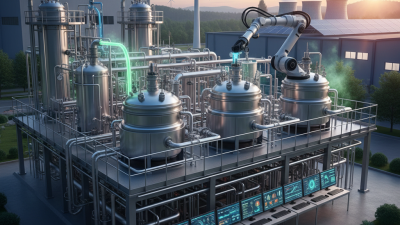
What is Industrial Chemistry and Why Does It Matter?
Industrial chemistry plays a vital role in our daily lives. It focuses on the chemical processes that transform raw materials into valuable products. This field impacts various industries, from pharmaceuticals to food production. Learning more about industrial chemistry helps us understand its significance.
The processes in industrial chemistry are complex. They require specialized knowledge and expertise. Professionals in this field must ensure safety and sustainability. They often face challenges and must adapt to new technologies. This adaptability is crucial as industries evolve.
Understanding industrial chemistry can lead to better products and processes. It is essential for developing innovative solutions to global challenges. As we explore this subject, we can appreciate its importance in shaping our world. The continuous evolution in this field encourages reflection and growth.
Introduction to Industrial Chemistry: Definition and Scope
Industrial chemistry plays a crucial role in modern society. It is the branch of chemistry that focuses on the production and use of chemical processes in large-scale manufacturing. This field encompasses a wide range of applications, from the creation of pharmaceuticals to the synthesis of new materials. Understanding industrial chemistry is essential for optimizing processes and improving efficiency in various industries.
The scope of industrial chemistry is vast. It includes the development of sustainable practices and the use of green chemistry techniques. These practices aim to minimize waste and reduce environmental impact. Researchers and professionals constantly seek innovative solutions to challenges like pollution and resource depletion. Their efforts demonstrate the need for continuous improvement and adaptive strategies in chemical manufacturing.
Despite its advancements, industrial chemistry faces many hurdles. The integration of new technologies can disrupt traditional practices. Additionally, regulatory compliance poses challenges for companies striving to meet environmental standards. Acknowledging these difficulties is vital for fostering growth and innovation in the field. Industrial chemistry shapes our daily lives, and its significance continues to evolve as we confront global challenges.
What is Industrial Chemistry and Why Does It Matter?
| Aspect |
Description |
| Definition |
Industrial chemistry involves the application of chemical and engineering principles to the manufacture of products on a large scale. |
| Importance |
It is crucial for developing sustainable processes, reducing environmental impact, and meeting the demands of a growing population. |
| Applications |
Used in producing chemicals, pharmaceuticals, plastics, and other materials crucial for everyday life. |
| Key Areas |
Focus areas include process development, quality control, and safety management in industrial settings. |
| Challenges |
Addressing waste management, energy consumption, and ensuring product safety are major challenges faced. |
| Future Trends |
Increase in green chemistry practices, automation, and digitalization of processes to enhance efficiency. |
Historical Overview of Industrial Chemistry and Its Evolution
Industrial chemistry has its roots in the late 19th century. As industrialization progressed, it began playing a pivotal role in chemical processes. The large-scale production of chemicals like ammonia, pioneered by Fritz Haber in 1909, transformed agriculture and food security. The Haber-Bosch process allowed the synthesis of fertilizers from nitrogen and hydrogen, significantly boosting crop yields. Reports estimate that about 40% of the world’s population relies on food produced using these fertilizers.
Over the decades, industrial chemistry has evolved significantly. The focus has shifted from merely increasing production to sustainability and efficiency. According to the American Chemical Society, the global market for industrial chemicals is expected to reach approximately $5 trillion by 2025. Innovations in biochemistry and green chemistry are essential for reducing harmful waste. Yet, challenges remain. The transition to sustainable practices often encounters resistance due to high initial costs and existing infrastructure limitations. The need for reliable data and a collective effort is vital for addressing these issues effectively.
Key Processes and Techniques in Industrial Chemistry
Industrial chemistry plays a vital role in modern manufacturing processes. It encompasses various techniques essential for producing everyday materials. Key processes include polymerization, fermentation, and catalysis. According to a 2022 report by the American Chemical Society, the global chemical industry generated over $4 trillion in revenue, underscoring its economic significance.
Polymerization, for example, transforms monomers into polymers, essential for plastics. This process affects multiple sectors, from packaging to textiles. Meanwhile, fermentation is crucial in pharmaceuticals and food industries. It utilizes microorganisms to create valuable compounds like antibiotics. A study from the International Journal of Industrial Chemistry noted that optimizing fermentation can increase yields by up to 50%.
Catalysis is another important technique, enhancing reaction speeds and efficiency. Approximately 90% of chemical processes rely on catalysts. Many reactions wouldn’t occur without them, resulting in significant energy savings. Despite these advancements, challenges remain. Environmental impacts and waste management in industrial chemistry raise important questions for sustainability. It is crucial for the industry to address these issues while continuing to innovate and improve processes.
Applications of Industrial Chemistry in Various Industries
Industrial chemistry plays a crucial role across various industries. Its applications are vast, ranging from pharmaceuticals to energy production. In the pharmaceutical sector, industrial chemistry facilitates drug development. Using precise chemical processes, companies can create effective medications with fewer side effects. This precision helps improve patient outcomes and enhances the quality of life.
In energy, industrial chemistry aids in developing sustainable solutions. For instance, chemical processes are vital in biofuel production. They convert organic materials into energy-efficient fuels. This not only reduces reliance on fossil fuels but also contributes to environmental sustainability. However, the efficiency of these processes can vary. Continuous optimization is essential, and reliance on outdated methods can hinder progress.
Consider the impact of industrial chemistry on materials. The production of polymers and plastics relies heavily on chemical reactions. These materials are used in countless applications, from packaging to electronics. It’s crucial to evaluate the environmental impact of these materials as well. Striving for recyclable options should be a priority for the industry. Ultimately, awareness and adaptation are key components of advancing industrial chemistry in all sectors.
Impact of Industrial Chemistry on Sustainability and Society
Industrial chemistry plays a critical role in addressing global sustainability challenges. This field focuses on transforming raw materials into valuable products while minimizing environmental impacts. According to the World Economic Forum, the chemical industry accounts for nearly 7% of global carbon emissions. Therefore, advancements in industrial chemistry are essential for decarbonizing various sectors.
Innovative processes such as green chemistry are gaining traction. These methods prioritize energy efficiency and the use of renewable resources. A report from the American Chemical Society highlights that implementing green chemistry in manufacturing can reduce waste by up to 90%. This not only conserves resources but also enhances public health by lowering toxic emissions.
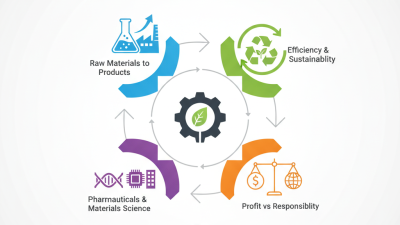
However, the industry faces significant hurdles. Transitioning to more sustainable practices can be costly and complex. Many companies struggle to balance profitability with environmental responsibility. As the demand for greener solutions increases, the shift may not occur quickly enough. This challenge requires ongoing dialogue among scientists, policymakers, and the public to ensure that industrial chemistry contributes positively to society and the environment.