
Careers
Top 10 Industrial Chemistry Innovations Transforming China Today?
Industrial chemistry plays a crucial role in shaping modern economies, particularly in China. According to a recent report by the China Chemical Industry Federation, the industrial chemistry sector contributes over 10% to the country's GDP. This significant figure highlights the sector's impact on economic growth and innovation.
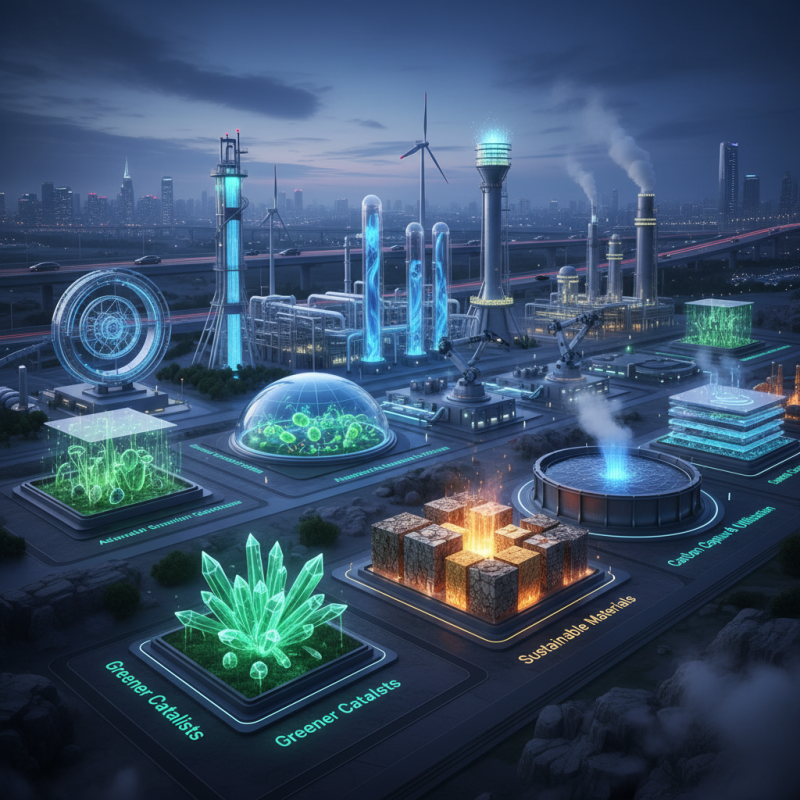
Recent advancements in industrial chemistry have revolutionized production processes. Innovations such as greener catalysts and sustainable materials are becoming more prevalent. Additionally, China aims to reduce its carbon footprint by investing in industrial chemistry research. Reports suggest that investments in sustainable practices could lead to a 30% reduction in emissions by 2030. However, challenges remain, including the need for better regulatory frameworks and enhanced public awareness.
While many breakthroughs are optimistic, the journey is not without its pitfalls. Some innovations may not deliver expected results or could be economically unviable. Continuous assessment and collaboration among industry specialists are necessary. In exploring the top 10 innovations in industrial chemistry, we must consider both their potential and the challenges they bring to the forefront of China's transformation.
Emerging Green Catalysis Techniques Revolutionizing Chemical Processes in China
Emerging green catalysis techniques are reshaping China's chemical industry. These innovations prioritize sustainability and efficiency. According to a recent report by the China Chemical & Physical Power Sources Industry Association, the use of green catalysts can reduce energy consumption by up to 30%. This shift supports China’s commitment to lowering carbon emissions.
Many traditional processes are wasteful. They often rely on hazardous materials, causing environmental concerns. New catalysts are made from biodegradable substances. They offer a safer, more sustainable alternative. For instance, researchers are exploring metal-organic frameworks. These materials have shown potential in promoting reactions efficiently. Their unique structures allow for selective reactions, minimizing byproduct formation.
Despite progress, challenges remain. Many companies hesitate to adopt new technologies. There are concerns about scalability and cost. Transitioning from established practices is difficult. However, the long-term benefits of green catalysis can’t be ignored. The future of China's industrial chemistry depends on these embracing innovations. It’s a necessary evolution in a rapidly changing global landscape.
Top 10 Industrial Chemistry Innovations Transforming China Today
| Innovation | Description | Impact on Industry | Environmental Benefits | Adoption Rate (%) |
|---|---|---|---|---|
| Biocatalysis | Using enzymes to accelerate chemical reactions | Improves process efficiency and reduces waste | Lower energy consumption and less toxic by-products | 40 |
| Electrochemical Processes | Utilizing electricity to drive chemical reactions | Reduces reliance on fossil fuels | Minimizes greenhouse gas emissions | 25 |
| Green Solvents | Using renewable solvents in chemical processes | Enhances safety and reduces environmental impact | Minimizes the ecological footprint | 35 |
| Nano-Catalysts | Catalysts at the nanoscale for improved reactions | Increases efficiency of chemical reactions | Reduces catalyst waste | 30 |
| Bioplastics | Plastics derived from renewable resources | Provides alternatives to traditional plastics | Decomposes more easily than conventional plastics | 20 |
| Carbon Capture Utilization | Capturing CO2 for use in chemical processes | Transforms a pollutant into a resource | Helps reduce carbon footprint | 15 |
| Hydrothermal Processing | Using high-temperature water for chemical reactions | Enables conversion of waste biomass to valuable products | Reduces landfill waste | 10 |
| Sustainable Feedstocks | Using renewable materials for chemical production | Lowers dependency on non-renewable resources | Promotes biodiversity and sustainability | 22 |
| Waste Valorization | Converting waste into valuable products | Creates an economic incentive to reduce waste | Decreases environmental pollution | 18 |
Advancements in Bioplastics Production and Their Economic Impact on Chinese Industry
The advancements in bioplastics production are shaping China's industrial landscape significantly. In recent years, the bioplastics market in China has expanded rapidly. Reports indicate the market value could reach $80 billion by 2025, driven by rising environmental awareness.
Bioplastics, created from renewable resources, reduce dependency on fossil fuels. This sector employs over 1 million people in China, highlighting its economic relevance. Innovative production methods are making bioplastics more efficient and cost-effective. For instance, new fermentation technologies are increasing yields and decreasing production times.
While the growth is promising, challenges remain. The bioplastics industry still faces hurdles like scalability and production costs. Reports suggest that despite progress, bioplastics account for only 1% of the total plastics market. Reflecting on these challenges can help industry leaders plan better. Investing in research and development is essential for overcoming barriers and maximizing economic impact.
Top 10 Industrial Chemistry Innovations Transforming China Today
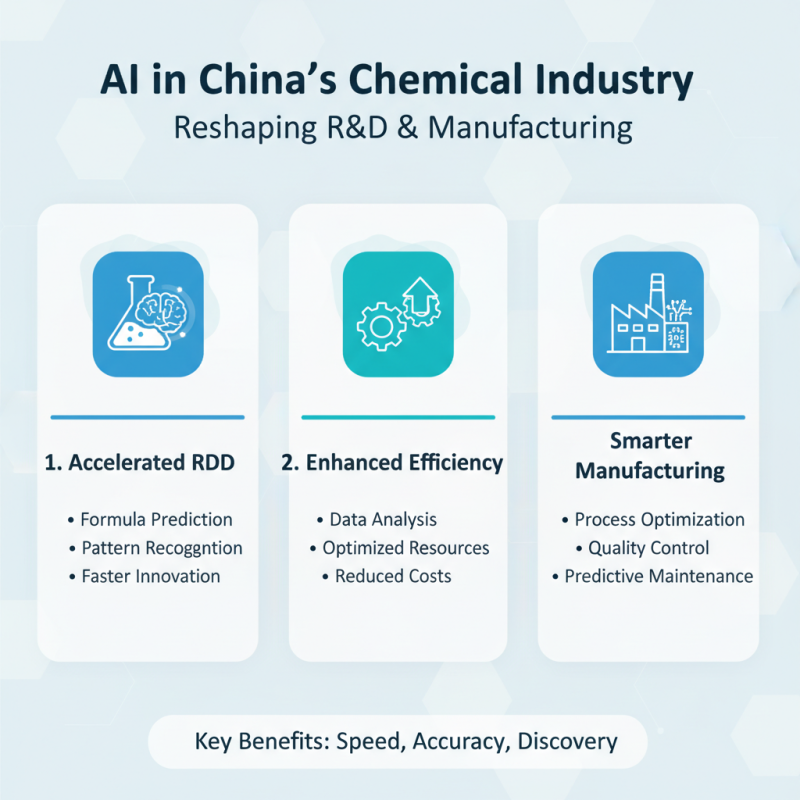
Innovative Use of Artificial Intelligence in Chemical R&D and Manufacturing
Artificial intelligence (AI) is reshaping the landscape of industrial chemistry in China. More companies are utilizing AI tools for research and development. These tools enhance efficiency and accuracy in chemical formula predictions. AI can analyze vast datasets, uncovering patterns that human researchers might overlook. This allows for faster innovation cycles and optimizes resource allocation.
In manufacturing, AI-driven automation is streamlining production processes. For instance, smart sensors monitor equipment performance in real time. They provide critical insights that reduce downtime and enhance safety. Yet, there are challenges. The reliance on AI raises concerns about data security and ethics. Additionally, workforce adaptation is crucial as automation transforms job roles.
However, the integration of AI in chemistry isn't perfect. The technology requires continuous updates and investments. There can be a steep learning curve for chemists unfamiliar with AI systems. Thus, encouraging collaboration between AI experts and chemists is essential to bridge the gap. Balancing innovation with ethical considerations and training programs will determine the future of industrial chemistry in China.
Breakthroughs in Battery Chemistry Driving China's Renewable Energy Transition
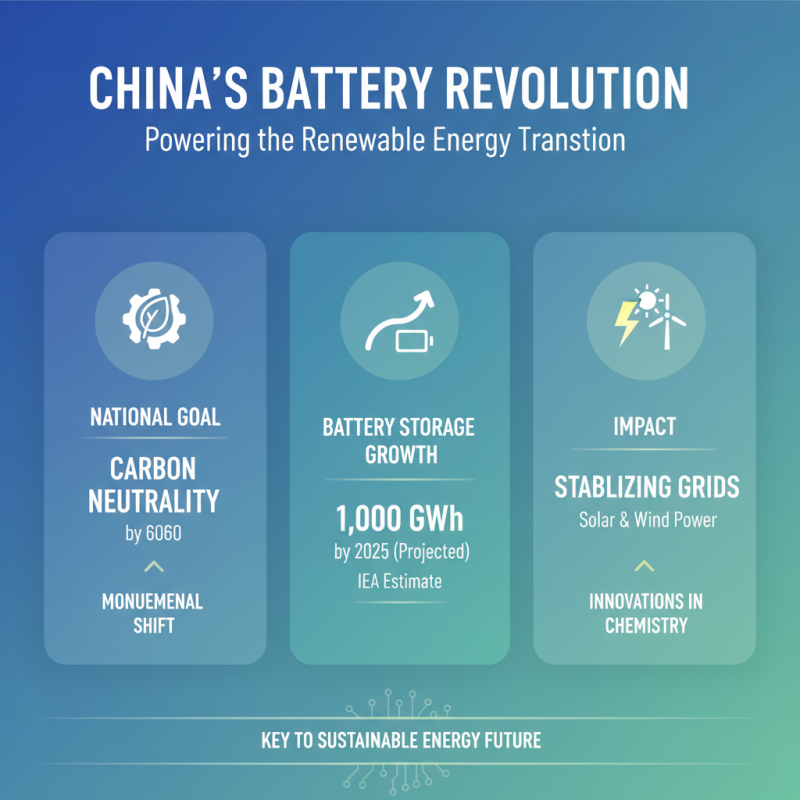
China is rapidly advancing its renewable energy sector, mainly through innovations in battery chemistry. The national goal is to achieve carbon neutrality by 2060, which requires monumental shifts in energy storage solutions. According to the International Energy Agency, battery storage capacity in China is expected to increase significantly, potentially reaching 1,000 GWh by 2025. This growth plays a critical role in stabilizing power grids fueled by intermittent renewable sources like solar and wind.
A notable development is in solid-state batteries. These batteries promise higher energy density and enhanced safety compared to conventional lithium-ion options. Researchers from various universities and institutes in China are collaborating to overcome existing material challenges. For instance, recent findings indicate that innovative electrolyte compositions can improve performance by 30%. Companies are investing heavily in pilot projects and production facilities, signifying confidence in these technologies.
While progress is visible, challenges remain. Production costs for advanced batteries are still high, limiting widespread adoption. Moreover, recycling methods for new chemistries need further refinement to prevent resource depletion. As the industry evolves, a strategic focus on sustainability and efficiency is essential to bolster the country's renewable energy transition. This innovation pathway illustrates both the achievements and setbacks faced in achieving a sustainable future.
Sustainable Water Treatment Innovations Gaining Traction in Industrial Applications
Sustainable water treatment innovations are reshaping industrial applications across China. Recent reports indicate that industries are increasingly adopting advanced filtration and purification technologies. These methods significantly reduce contaminants in water, addressing both environmental and regulatory challenges.
One notable trend is the use of biofiltration systems. These systems utilize natural processes to treat wastewater. A study showed that biofiltration can achieve over 90% removal of certain pollutants. This is crucial for industries that face stringent discharge regulations. Traditional methods often fall short, creating bottlenecks in compliance.
Moreover, membrane technologies have gained traction. Ultrafiltration and reverse osmosis systems are highly effective. Data suggests that these technologies can reduce water usage by up to 50%. However, their implementation can be costly, and maintenance requires skilled personnel. This presents a challenge for smaller industries.
Water scarcity is a pressing issue. The demand for efficient treatment solutions continues to rise. As companies strive for sustainability, the role of innovation becomes pivotal. It is imperative to balance cost and efficiency. The future will depend on integrating these advancements while ensuring accessibility for all sectors.
Related Posts
-
2026 How to Optimize Industrial and Chemical Solutions for Efficiency?
-
2025 How to Choose the Best Industrial and Chemical Solutions for Your Business
-
2026 Top Chemical Innovations Shaping the Future of Chemicals Industry?
-
How to Optimize Chemical Processing for Efficiency and Safety?
-
5 Industrial and Chemical Solutions Driving 60% Efficiency in Manufacturing
-
How to Choose the Right Manufacturing Chemical for Your Needs?