


Careers

How to Source Potassium Nitrate Saltpetre in 2026?

Sourcing Potassium Nitrate Saltpetre in 2026 requires more than comparing online prices. Buyers need agricultural purpose, documented quality, and lawful supply chains. Potassium nitrate, commonly called saltpetre, supplies both potassium and nitrate nitrogen. Its value depends on crop needs, irrigation systems, and regional regulations.

The USGS Mineral Commodity Summaries 2025 identifies potash as a major global fertilizer input. IFA’s Medium-Term Fertilizer Outlook 2024–2028 also highlights concentrated production, freight exposure, and changing farm demand. These reports do not make sourcing simple. They make verification essential. Market prices can shift quickly when energy costs, shipping capacity, or export policies change.

“Fertilizer is not a dirty word,” said Dr. Terry Roberts, former Director General of the International Fertilizer Association. His point supports responsible use, not careless purchasing. A credible supplier should provide a current certificate of analysis, safety data sheet, batch number, and business registration. Check potassium and nitrate specifications carefully. Confirm packaging integrity. Request agricultural-use documentation.

A low quote can be a warning. It may hide weak traceability, outdated testing, or unauthorized resale. Buyers should avoid informal marketplaces and suppliers refusing compliance questions. They should also confirm import, storage, transport, and end-use rules before payment. This guide focuses strictly on legitimate agricultural procurement. It excludes pyrotechnic, explosive, and other prohibited applications.

The practical lesson is uncomfortable: sourcing efficiency cannot replace supplier trust. Good procurement leaves a paper trail, even when the purchase seems routine.
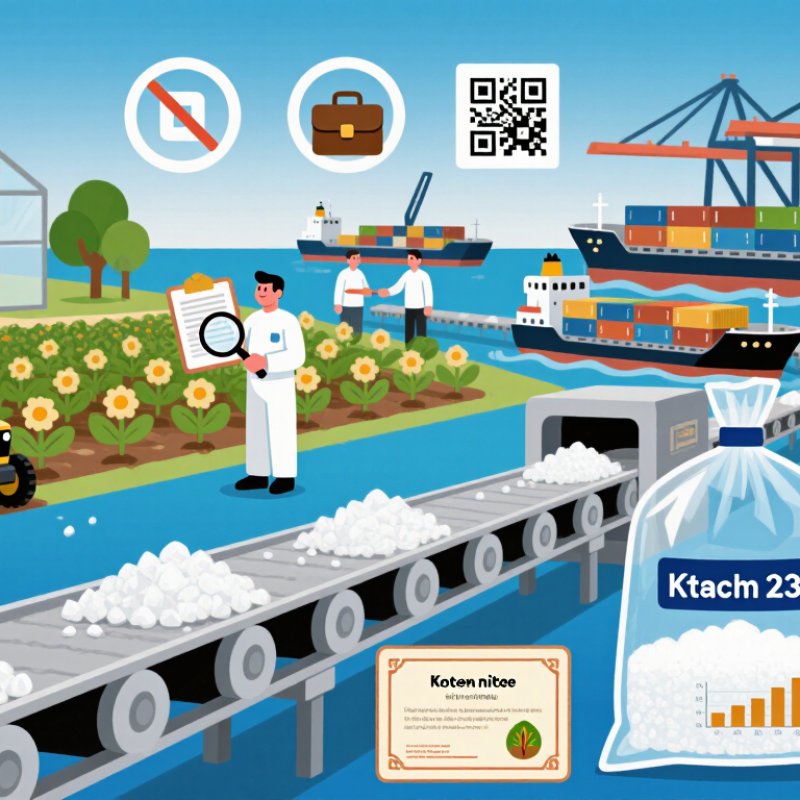
How to Source Potassium Nitrate Saltpetre in 2026?

What Is Potassium Nitrate and What Is It Used For?

Potassium nitrate, also called saltpetre, is an inorganic salt with the formula KNO₃. It usually appears as white crystals or a fine powder. The material dissolves in water and supplies two useful nutrients: potassium and nitrate nitrogen. In agriculture, it supports flowering, fruit development, and overall plant nutrition. It is often selected when crops need potassium without added chloride.

Its uses extend beyond farming. Food manufacturers may use food-grade potassium nitrate in carefully controlled preservation processes, where local regulations permit it. Laboratories and industrial facilities also use it in approved chemical and thermal applications. The exact grade matters greatly. Agricultural material should not be treated as food-grade material. That distinction is easy to overlook.

For responsible sourcing in 2026, buyers should work with licensed chemical or agricultural suppliers. Request a current certificate of analysis, safety data sheet, purity information, and transport details. Check the label for grade, moisture content, and storage guidance.

Potassium nitrate is an oxidizing substance, so it requires separation from incompatible materials and ignition sources. Follow local laws and workplace procedures.

Online listings can appear convenient, but they may provide incomplete specifications. I would verify every document before placing an order. Even experienced buyers can assume that similar-looking crystals have identical quality. They do not.
Which Purity, Grade, and Quantity Best Match the Intended Use?

Choosing potassium nitrate in 2026 starts with the intended use, not the lowest quoted price. Agricultural applications may require a clearly specified fertilizer grade, while laboratory testing often demands analytical or reagent grade. Food-related use needs an approved food grade and documented compliance with local regulations. These categories are not interchangeable.

Purity should match the process. A visible white crystal is not proof of quality. Ask for a current certificate of analysis showing assay, moisture, insoluble matter, and relevant contaminants. Lot numbers, sealed packaging, and traceable documentation matter. In my experience, missing paperwork creates more risk than a slightly higher purchase price. I once treated a supplier’s specification sheet as sufficient, and that was too optimistic.

Quantity should follow verified demand. A small sample or 25-kilogram trial can confirm solubility, handling, and process performance before larger purchasing. Bulk orders may reduce cost, but they also increase storage responsibilities. Keep the material dry, clearly labeled, and separated from incompatible substances. Follow the safety data sheet and local transport rules. Do not buy excess stock “just in case.” That decision often looks efficient until storage conditions, shelf life, or changing regulations become a problem. Suppliers should be able to explain their quality system, legal sales requirements, and replacement policy when a batch fails inspection.

How to Identify Legitimate Potassium Nitrate Suppliers

How to Source Potassium Nitrate Saltpetre in 2026?

Legitimate potassium nitrate suppliers should provide traceable, consistent documentation. Request the product specification, safety data sheet, certificate of analysis, and batch number before purchasing. The chemical identity should match CAS 7757-79-1. Check potassium content, nitrate content, moisture, chloride, insoluble matter, and heavy-metal limits. A certificate alone is not enough. Verify that an independent laboratory issued or confirmed the results.

Market data can support supplier screening. The International Fertilizer Association’s 2024 outlook placed global fertilizer demand near 200 million tonnes of nutrients annually. The U.S. Geological Survey reported roughly 77 million tonnes of global potash production, measured as K2O, in 2024. These figures show a large supply system, but they do not prove product authenticity. Use UN Comtrade records under HS 283421 to compare a supplier’s declared trade activity with its claimed origin and export history.

Ask for the legal company name, registered address, tax details, and manufacturing location. Confirm whether the seller is a producer, authorized distributor, or broker. Inspect packaging photographs for intact seals, readable lot codes, and dry storage conditions. A short video call can reveal basic warehouse practices. Avoid sellers requesting unusual payment methods or refusing routine compliance checks. One weakness remains: online records can be outdated. Recheck documents before every substantial order, and keep written records of approvals, test results, and delivery inspections.

What Legal, Safety, and Transport Requirements Apply in 2026?

Sourcing potassium nitrate in 2026 requires more than comparing prices. Confirm the seller’s legal registration, product identity, end use, and destination-country controls. Potassium nitrate is commonly identified as UN 1486, Class 5.1 oxidizing substance, Packing Group III under the UN Model Regulations, but local rules may add permits or reporting duties. Check precursor-control requirements before payment. Do not guess.

Request a current Safety Data Sheet, Certificate of Analysis, batch number, purity specification, and origin statement. The SDS should describe oxidizing behavior, spill response, firefighting limits, and storage separation. Store the material in a cool, dry, ventilated area, away from fuels, organic matter, reducing agents, and contamination. Keep it dry. Staff should use documented training and suitable protective equipment. A small labeling mistake can become a serious warehouse problem.

Transport planning must match the shipping mode. The 2025 ADR framework applies to many European road movements, while the IMDG Code Amendment 42-24 governs relevant sea shipments from 2026. Packaging, marks, transport documents, emergency information, and carrier acceptance all need verification. UNCTAD’s Review of Maritime Transport 2024 notes that more than 80% of global merchandise trade by volume moves by sea, making port documentation especially important. For market context, the International Fertilizer Association’s 2024 outlook tracks continued growth in global fertilizer demand, but demand does not remove compliance duties. Confirm the final classification with a dangerous-goods specialist. Rules change, and assumptions age badly.

How to Verify Quality, Documentation, Packaging, and Storage Conditions

How to Source Potassium Nitrate Saltpetre in 2026?

A reliable purchase begins with a documented specification, not a low quotation. International Fertilizer Association data commonly identifies potassium nitrate fertilizer as approximately 13% nitrogen and 46% potassium oxide. Ask for a current certificate of analysis, showing assay, moisture, insoluble matter, and trace metals. The batch number must match the certificate, invoice, and container label. Check the issuing laboratory’s accreditation, preferably ISO/IEC 17025. A scanned document without laboratory contact details deserves caution.

Documentation matters.

Request a safety data sheet aligned with the current UN Globally Harmonized System. Verify the product classification, transport requirements, origin, and intended agricultural or industrial use. Customs records should match the declared HS classification, quantity, and supplier identity. The 2024 UN Comtrade database uses HS 283421 for potassium nitrate, which helps compare trade descriptions. However, tariff codes do not prove quality. That distinction is easy to miss.

Packaging should be sealed, clean, moisture-resistant, and clearly labeled by lot. Industry handling guidance treats potassium nitrate as an oxidizing material, so storage requires separation from fuels, organic materials, reducing agents, and unnecessary heat. Keep bags on pallets in a cool, dry, ventilated warehouse. Inspect for caking, torn seams, water marks, or damaged labels before acceptance. My own checklist once focused too heavily on assay and overlooked pallet moisture. That was a practical mistake. Record inspection photos, temperature observations, and release decisions for every shipment.

How to Source Potassium Nitrate Saltpetre in 2026?

Use the reference composition below as a basic identity check when reviewing a supplier’s Certificate of Analysis (CoA). The values are calculated from the chemical formula KNO3 and are not supplier-specific results.

Practical Verification Checklist

  • Quality: Confirm the material is potassium nitrate (KNO3), review assay, moisture, insoluble matter, chloride, and other impurity results on the CoA, and request lot-specific testing.
  • Documentation: Obtain the current Safety Data Sheet, CoA, product specification, transport classification, country-of-origin details, and any permits required by local regulations.
  • Packaging: Check that bags or drums are sealed, clearly labeled, moisture-resistant, undamaged, and marked with the lot number, net weight, manufacture date, and hazard information where required.
  • Storage: Keep potassium nitrate dry, cool, and well ventilated. Segregate it from combustible materials, reducing agents, acids, organic materials, and sources of heat or ignition because it is an oxidizing substance.

Reference values: calculated using standard atomic weights for potassium, nitrogen, and oxygen. Always verify the purchased lot against applicable regulations and the supplier’s current technical documents.