
Careers

Top Chemical Analysis Equipment Suppliers Worldwide
Choosing among top chemical analysis equipment suppliers worldwide is not just a purchasing exercise. It affects how confidently a laboratory can identify compounds, measure trace concentrations, and defend its results. Instruments may look similar in a catalog. Their performance can differ under real conditions, where sample preparation, calibration, maintenance, and operator training all matter.
Lord Kelvin’s measurement principle remains relevant: “When you can measure what you are speaking about, and express it in numbers, you know something about it.” He was a physicist, not a supplier or analytical chemist, but the point applies directly to chemical analysis. A precise instrument is only part of the evidence. Reliable results also depend on validated methods, suitable reference materials, and clear records. A drifting baseline or a poorly matched detector can change the story a sample tells.
This overview examines suppliers through practical criteria: instrument range, application support, service access, software usability, and documented performance. It considers tools such as chromatography systems, mass spectrometers, and spectroscopy platforms, while recognizing that no single provider fits every laboratory. A small quality-control lab may value fast repairs; a research facility may need specialized configurations. Those differences are easy to underestimate. Supplier claims deserve careful checking against independent documentation and the lab’s own requirements. Even a strong shortlist can miss something. That is worth revisiting before a final decision.
Chemical Analysis Equipment: Scope and Core Technologies
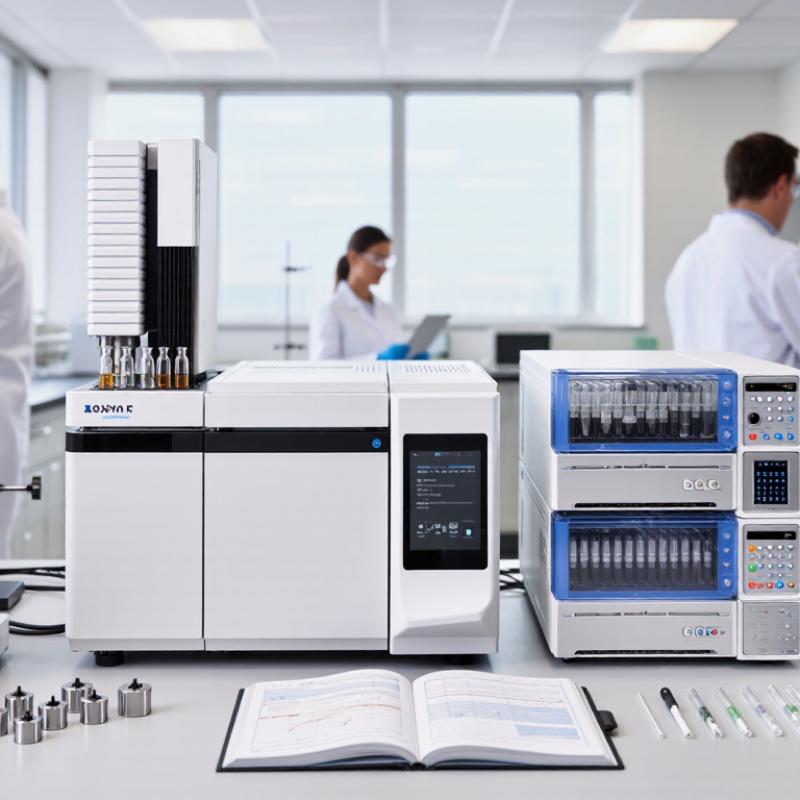
Chemical analysis equipment covers tools that identify substances and measure their amounts in raw materials, process samples, and finished products. The range extends from balances and pH meters to chromatographs, spectrometers, and mass spectrometers. Each answers a different question. Chromatography separates mixture components; spectroscopy measures how materials interact with light; mass spectrometry helps distinguish compounds by mass-to-charge ratio. Electrochemical systems can measure ions or redox behavior in liquids. The right setup depends on the sample, required detection limits, and how quickly results are needed. More features do not always mean better results.
Reliable measurements need more than a capable instrument. Analysts commonly check calibration with suitable standards, run blanks, and assess whether the sample matrix interferes with the method. A cloudy liquid, for example, may distort an optical reading; filtration could help, but it may also remove material of interest. Small details matter. Temperature, sample handling, and routine maintenance can shift results. Method validation helps establish whether an instrument is fit for its intended purpose, while records make results easier to review. This work can feel repetitive. It is also where confidence is built, though no workflow removes every source of uncertainty.
Top Chemical Analysis Equipment Suppliers Worldwide - Chemical Analysis Equipment: Scope and Core Technologies
| Equipment Category | Core Technology | Typical Measurements | Common Samples | Typical Applications | Key Selection Considerations |
|---|---|---|---|---|---|
| Liquid chromatography systems | Separation by differential interaction with a liquid mobile phase and a stationary phase; detection may use UV-visible, fluorescence, or other detectors. | Component identity and concentration; separation of mixtures; impurity profiles. | Prepared liquid extracts, dissolved compounds, and aqueous or organic solutions. | Pharmaceutical, food, environmental, and chemical quality-control testing. | Required separation, detector compatibility, sample throughput, solvent use, and method requirements. |
| Gas chromatography systems | Separation of vaporized compounds in a carrier gas as they pass through a column; detectors respond to the separated components. | Volatile and semi-volatile compound profiles, concentrations, and residual solvents. | Gases and liquid or solid samples that can be introduced as vapors, often after preparation. | Petrochemical analysis, residual-solvent testing, fragrance analysis, and environmental monitoring. | Volatility and thermal stability of analytes, inlet configuration, detector type, and sample introduction needs. |
| Mass spectrometry systems | Ionization followed by separation of ions according to mass-to-charge ratio and detection of the resulting signal. | Molecular or elemental information, compound identification, and quantitative measurements. | Gases, liquids, and prepared solids, depending on the ionization source and instrument configuration. | Confirmatory analysis, unknown identification, trace analysis, and hyphenated chromatography workflows. | Target analytes, required mass range and sensitivity, ionization method, and compatibility with a separation system. |
| Atomic spectroscopy instruments | Measurement of element-specific absorption or emission signals; instrument designs include atomic absorption and optical emission techniques. | Elemental concentrations, including selected metals and other measurable elements. | Digested liquids, aqueous solutions, and—in suitable configurations—solid samples. | Water testing, metals analysis, materials testing, and process or product quality control. | Element list, concentration range, sample matrix, sample preparation, and throughput needs. |
| Infrared and Raman spectrometers | Measurement of infrared absorption or inelastic light scattering to provide molecular vibrational information. | Functional-group information, material identification, and—when validated—composition or concentration. | Liquids, powders, films, and solid materials, depending on sampling accessories and method. | Raw-material identification, polymer and chemical characterization, and selected process measurements. | Sample form, spectral range, measurement geometry, water or fluorescence interference, and library or method needs. |
| UV-visible spectrophotometers | Measurement of light absorption or transmission in ultraviolet and visible wavelength regions. | Absorbance, transmittance, and analyte concentration using an appropriate validated method. | Typically clear liquid solutions; some configurations measure films or other materials. | Color measurement, reaction monitoring, concentration assays, and routine laboratory quality control. | Wavelength range, sample path length, spectral bandwidth, sample turbidity, and measurement throughput. |
| X-ray fluorescence analyzers | Detection of characteristic fluorescent X-rays emitted after a sample is excited by primary X-rays. | Elemental composition for elements within the instrument’s validated operating range and method. | Prepared solids, powders, liquids, or coatings, depending on instrument design and sample presentation. | Materials screening, alloy and mineral analysis, coatings assessment, and selected process checks. | Element range, sample homogeneity, geometry, matrix effects, calibration, and required detection limits. |
| Electrochemical analyzers | Measurement of electrical potential, current, or conductivity associated with chemical species or solution properties. | pH, conductivity, ion concentration, redox potential, or other method-specific electrochemical signals. | Aqueous solutions and process streams compatible with the selected electrode or sensor. | Water quality, chemical processing, fermentation monitoring, and laboratory solution testing. | Sensor compatibility, calibration frequency, sample temperature, fouling risk, and in-line or bench-top use. |
| Thermal analysis instruments | Measurement of material properties as temperature changes; methods include differential scanning calorimetry and thermogravimetric analysis. | Heat-flow transitions, mass change, thermal stability, and decomposition behavior, depending on method. | Small solid or liquid samples prepared in method-appropriate pans or holders. | Polymer, material, formulation, and chemical stability characterization. | Temperature range, atmosphere control, sample mass, heating program, and the property being investigated. |
| Automated titration systems | Controlled addition of a titrant with endpoint detection by an electrode, photometric sensor, or other suitable technique. | Concentration or chemical capacity determined by a validated titration reaction, such as acidity or alkalinity. | Prepared liquid samples and compatible suspensions or process samples. | Routine chemical quality control, water analysis, food testing, and raw-material assessment. | Reaction chemistry, endpoint detection, sample volume, reagent handling, and method standardization. |
Note: Instrument capabilities and measurable ranges vary by configuration, sample preparation, method validation, and applicable standards.
Related Posts
-

Discover the Best Superior Chemical Solutions for Global Buyers?
-

China Top 10 Industrial Chemistry Suppliers for Global Buyers
-

2026 Top Trends in Superior Chemical Solutions for Industry Growth?
-
What is the Future of Chemical Manufacturing Industry?
-
How to Source Ultra Pure Chemicals for Your Business Needs?
-
2026 How to Understand Chemistry Chemicals and Their Everyday Applications?