2026 Top Chemical Chemicals for Global Buyers to Consider?
The global market for chemical chemicals is evolving rapidly. Buyers need to stay informed about the top chemical chemicals for 2026. This landscape is shaped by innovation and sustainability. Chemicals are essential to many industries, including pharmaceuticals, agriculture, and technology.
Understanding these trends can help businesses make better choices. It’s vital to consider factors such as quality, pricing, and safety. However, not all suppliers meet high standards. Some may overpromise but underdeliver.
Furthermore, regulatory compliance is crucial in this field. Buyers must navigate various laws and guidelines. This challenge highlights the importance of working with reliable suppliers. Ultimately, informed decisions can lead to successful partnerships and a thriving business.
Key Trends Influencing Chemical Demand in 2026
In 2026, several key trends are shaping the demand for chemicals worldwide. Sustainability is a growing priority. Many industries focus on reducing their carbon footprint. This shift drives demand for eco-friendly alternatives and bioplastics. Companies are under pressure to adopt practices that minimize environmental impact.
Innovation in technology also plays a crucial role. Advanced manufacturing processes boost efficiency and reduce waste. Companies are investing in research to develop new chemical formulations. This can address both market needs and environmental concerns. However, the fast pace of change means businesses must keep up or risk falling behind.
Economic factors cannot be overlooked. Global supply chain disruptions influenced the availability of chemical products in recent years. As economies recover, demand will fluctuate. Companies need to adapt to these market dynamics. Balancing cost and quality will be a constant challenge for buyers.
2026 Top Chemical Chemicals for Global Buyers to Consider
| Chemical Type |
Projected Demand Growth (%) |
Key Trends Influencing Demand |
| Polyethylene |
4.5% |
Growing packaging applications and lightweight materials |
| Ammonia |
3.2% |
Increasing demand for fertilizers in agriculture |
| Acetic Acid |
5.0% |
Rising production of plastics and textiles |
| Ethylene Glycol |
6.0% |
Enhanced automobile production and antifreeze applications |
| Benzene |
2.8% |
Demand in chemical intermediates and solvents |
Emerging Markets for Chemical Buyers in the Global Landscape
Emerging markets are reshaping the global chemical landscape. Countries like India and Brazil show potential. Their growing economies demand innovative chemical solutions. Rising populations and urbanization create new markets. This trend attracts attention from global buyers eager for opportunities.
Investors must assess these markets carefully. Infrastructure challenges and supply chain issues persist. Regulatory environments can be complex. Understanding local needs is vital for success. Sustainable practices gain importance in these regions, influencing buyer decisions. Adapting products to meet local standards can be challenging.
Market entries require thorough research and strategic planning. Engaging with local partners can enhance prospects. Knowledge of cultural nuances facilitates better business relationships. Buyers must stay informed and flexible. Monitoring these emerging markets promises significant rewards. However, the journey is filled with uncertainties and learning opportunities.
Top 5 Innovative Chemicals Reshaping Various Industries
Innovative chemicals are at the forefront of transforming industries. These substances not only enhance product performance but also promote sustainability. One notable example is biodegradable polymers.
They break down naturally, reducing plastic waste significantly. This innovation is essential as global plastic pollution grows.
Another key chemical is carbon capture agents. These materials help in capturing CO2 emissions from industrial processes. Their advancement is crucial in the fight against climate change. As industries aim to cut their carbon footprints, these agents become indispensable.
Smart coatings are also revolutionizing how surfaces are maintained. These coatings can self-heal, resisting corrosion and wear. This could alter maintenance practices across sectors. However, the high cost of production remains a challenge. These chemicals illustrate the potential for positive change, yet they also prompt reflection on scalability and accessibility.
Sustainability Factors Driving Chemical Selection for Buyers
As global buyers navigate the chemical market, sustainability plays a crucial role in their decisions. According to a recent report by McKinsey & Company, over 70% of chemical industry players prioritize sustainable practices in sourcing materials. This shift is not merely a trend; it's a fundamental change driven by consumer demand and regulatory pressures.
Implementing sustainable practices can lead to cost savings and improved efficiency. For instance, a focus on bio-based materials has been shown to reduce the carbon footprint significantly. However, these alternatives often come with higher initial costs or availability issues that buyers must navigate. It raises questions: Are the benefits worth the investments?
Tips: Always assess the long-term impact of your choices. Engage with suppliers who demonstrate a commitment to sustainability. Look for certifications that validate their claims. Exploring collaborative partnerships may also yield innovative solutions that benefit both parties. The path to sustainability is not linear, and continuous evaluation is necessary.
2026 Top Chemical Chemicals for Global Buyers to Consider
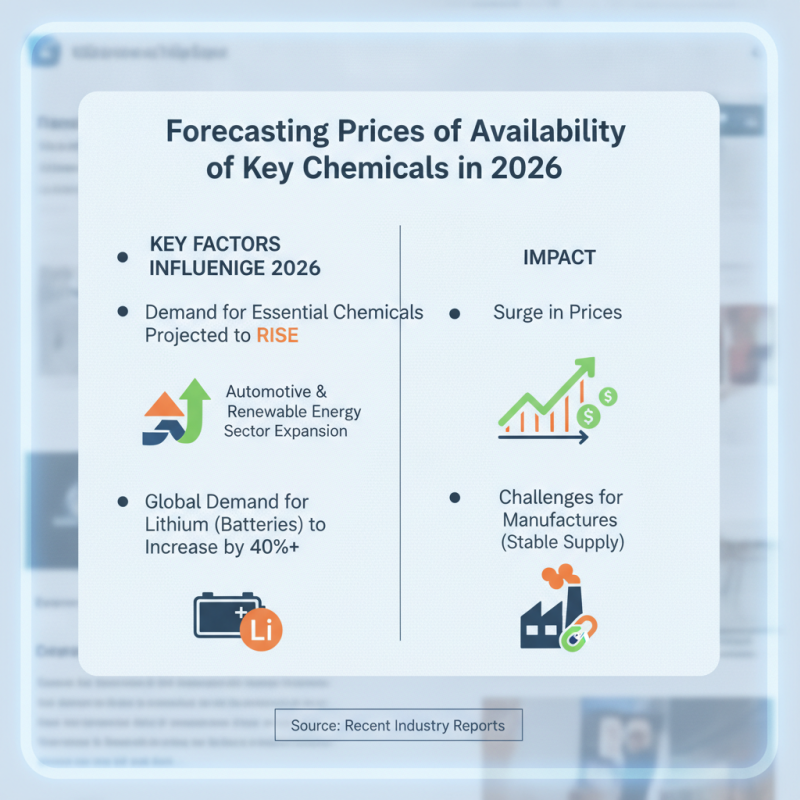
Forecasting Prices and Availability of Key Chemicals in 2026
As we anticipate the chemical landscape in 2026, several key factors will influence prices and availability. According to recent industry reports, demand for essential chemicals is projected to rise due to the expansion of sectors like automotive and renewable energy. For example, the global demand for lithium, a critical component in batteries, could increase by over 40%. This surge may drive prices up significantly, presenting challenges for manufacturers reliant on stable supply.
Supply chain disruptions further complicate the outlook. Many chemicals depend on raw materials from few geographic locations. Should geopolitical tensions arise or logistical issues persist, availability may dwindle. A study by the International Chemical Federation highlights that 30% of key chemicals experienced shortages in recent years. Such fluctuations lead to volatility in pricing, affecting businesses and consumer costs.
Also, environmental regulations are becoming stricter. Companies will need to adapt their production processes, which may incur additional costs. This transformation can hinder supply as firms navigate compliance requirements. Forecasting these shifts remains complex, making it essential for buyers to stay informed about the evolving chemical market dynamics for better strategic planning.