
Careers
How to Choose Semiconductor Chemicals for Global Buyers?
Choosing semiconductor chemicals for global production is not simply a matter of comparing price and purity claims. The right choice depends on the process step, equipment, material compatibility, and the manufacturer’s documented specifications. A chemical suitable for one cleaning or etching application may introduce unacceptable variation in another. Details matter.
Buyers should review current certificates of analysis, trace-metal data, packaging specifications, and safety data sheets before qualifying a product. They should also ask how the supplier manages batch consistency, change notifications, contamination controls, and delivery continuity. For example, drum or bottle materials, seal integrity, and storage conditions can affect quality during transport. A polished specification sheet is useful, but it cannot replace qualification under the buyer’s actual process conditions.
Global sourcing adds practical questions. Confirm that documentation, labeling, and shipping arrangements meet the requirements of the destination market, and check whether temperature control or special handling is needed. Assess the supplier’s technical support and ability to investigate out-of-spec results with clear records. Independent testing may help verify critical attributes, especially during initial qualification or after a process change. No shortcut works.
A disciplined comparison should weigh total cost, reliability, and technical fit—not unit price alone. Still, even a strong checklist has limits: performance can vary with tools, recipes, and site conditions. Buyers should validate assumptions with process engineers and quality teams, then review results over time. That review is easy to postpone, and it should not be.
Understanding Semiconductor Chemicals and Their Role in Wafer Processing
How to Choose Semiconductor Chemicals for Global Buyers?
Understanding Semiconductor Chemicals and Their Role in Wafer Processing
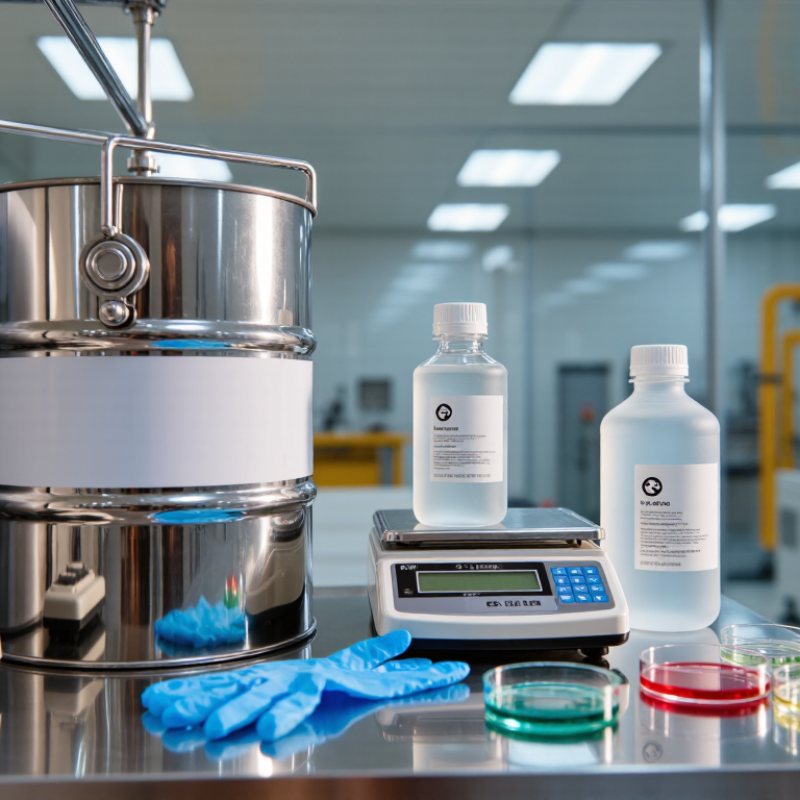
Semiconductor chemicals support many steps in wafer processing, from cleaning and etching to polishing. Each step needs materials with carefully controlled properties. A cleaning solution may remove organic residue, while an etchant removes selected films without damaging nearby layers. Tiny amounts matter. Trace metals or particles can affect process results, especially across repeated production runs.
Buyers should match chemical specifications to the actual process, not rely on a broad purity label alone. Review limits for particles, metals, and moisture, along with batch consistency and packaging details. A clear liquid is not proof of suitability. Technical data, safety documentation, and a certificate of analysis help teams check what each lot contains. Process engineers should also confirm compatibility with tools, materials, and established procedures.
Global supply adds practical questions. Check how containers are sealed, stored, and transported, since some chemicals require controlled conditions. Confirm that delivery schedules and documentation fit the receiving site’s workflow. Even experienced teams can overlook a small difference between a sample and a production lot. There is no perfect specification for every fab; performance needs verification under the buyer’s own process conditions. That step takes time, and sometimes the first assumption is wrong.
How to Choose Semiconductor Chemicals for Global Buyers?
Understanding Semiconductor Chemicals and Their Role in Wafer Processing
Common wafer-cleaning examples include SC-1 (organic and particle removal), SC-2 (metal-ion cleaning), and piranha solution (organic removal). The chart shows typical recipe volume parts, not percentages; actual formulations and process conditions vary.
Buyers should verify purity specifications, trace-metal limits, material compatibility, and site requirements. These mixtures are hazardous and must only be prepared and handled under qualified procedures.
Matching Chemical Grades to Process Requirements and Purity Limits
How to Choose Semiconductor Chemicals for Global Buyers?
Matching Chemical Grades to Process Requirements and Purity Limits
A chemical grade should match the process step, not just a supplier’s broad purity label. For wafer cleaning, compare limits for trace metals, particles, and organic residues against the tool and recipe requirements. A value acceptable for one step may cause defects in another. Check the analytical method and detection limit, too; “below limit” means little if the test cannot measure low enough. Small details matter.
Tips: Review the certificate of analysis for each lot. Confirm concentration, container material, seal integrity, and storage conditions. Ask how changes in raw materials or testing are communicated. Keep retained samples when your quality system allows.
Before approving a grade, assess how it performs in your actual process window. Review rinse behavior, residue risk, and compatibility with delivery lines, then use a controlled qualification run. Global buyers should also compare packaging and transport conditions, since heat or long transit can affect stability. Specifications are useful, but they do not replace process data. I have seen teams focus on a headline purity figure and overlook a critical contaminant limit; that is an easy assumption to make, and worth checking twice.
How to Choose Semiconductor Chemicals for Global Buyers? — Matching Chemical Grades to Process Requirements and Purity Limits
| Chemical or Material | Typical Semiconductor Use | Grade and Selection Criteria | Key Purity or Control Parameters | Buyer Verification Points |
|---|---|---|---|---|
| Ultrapure water (UPW) | Wafer rinsing, chemical dilution, and cleaning systems | Semiconductor-grade UPW produced and monitored at the point of use | Resistivity: up to 18.2 MΩ·cm at 25°C; TOC, dissolved oxygen, particles, bacteria, and metals controlled to the facility’s process specification | Confirm measurement location, continuous monitoring method, sampling protocol, and limits for the specific tool or process |
| Hydrogen peroxide (H₂O₂) | Oxidizing cleans, including formulations used in wafer surface preparation | Electronic-grade material; select concentration and stabilizer profile compatible with the cleaning recipe | Commercial concentrates are commonly supplied around 30–31% by weight; control trace metals, particles, anions, and organic residues to the process specification | Check assay, stabilizer disclosure, lot-to-lot consistency, container cleanliness, and validated shelf life |
| Sulfuric acid (H₂SO₄) | Oxidizing cleans and photoresist removal formulations | Electronic-grade acid with impurity limits matched to the wafer process and dilution conditions | Concentrated product is commonly supplied at approximately 96–98% by weight; trace metals, particles, and relevant anions require application-specific limits | Review assay method, trace-metal reporting limits, packaging material, and procedures for dilution and delivery |
| Hydrofluoric acid (HF) | Silicon oxide etching and oxide-removal steps | Electronic-grade HF; choose concentration and formulation according to etch-rate and selectivity requirements | Aqueous concentrates are commonly available near 49% by weight; metals, particles, and ionic contaminants must meet the process-specific specification | Verify concentration, compatible wetted materials, transport controls, and trace-impurity data; HF requires specialized safety procedures |
| Hydrochloric acid (HCl) | Acid cleaning and selected wet-process formulations | Electronic-grade acid selected for the intended dilution, temperature, and process sequence | Concentrated aqueous product is commonly supplied near 37% by weight; metals, particles, and anionic impurities are controlled by application | Confirm assay, impurity units and detection limits, container compatibility, and handling requirements |
| Ammonium hydroxide (NH₄OH) | Alkaline wafer cleaning and particle-removal formulations | Electronic-grade solution with concentration and impurity profile suitable for the cleaning recipe | Commercial aqueous solutions commonly range around 28–30% by weight; metals, particles, and ionic contaminants require process-defined limits | Check concentration basis, volatility-related handling controls, packaging, and trace-metal results for each lot |
| Isopropyl alcohol (IPA) | Rinsing, drying, and selected solvent-cleaning applications | Semiconductor or electronic grade with low residue and a controlled water content | Assay, water, non-volatile residue, particles, and trace metals should be specified for the intended tool and process | Request the analytical method and reporting limits; confirm filtration, container cleanliness, and solvent recovery compatibility if applicable |
| Photoresist developer (commonly aqueous TMAH-based) | Developing exposed photoresist in photolithography | Electronic-grade, formulation-specific developer; concentration and surfactant package must match the resist and lithography process | Control active concentration, metals, particles, organic contaminants, and filtration performance against the qualified recipe | Do not substitute by nominal concentration alone; validate critical dimension, defectivity, compatibility, and change-control documentation |
| Chemical mechanical planarization (CMP) slurry | Planarization of dielectric, copper, tungsten, or other films | Process-specific slurry with abrasive type, particle-size distribution, oxidizer, and additives matched to the target film | Control solids content, pH, particle-size distribution, large-particle tail, metals, and settling or stability behavior | Review defectivity data, filtration limits, storage and agitation instructions, and performance on the buyer’s qualified tool set |
| Electronic-grade solvents (for example, PGMEA or NMP where permitted) | Photoresist formulation, coating, stripping, or related process steps | Choose solvent grade and composition for the specific resist system and applicable site regulations | Control assay, water, acidity or alkalinity where relevant, non-volatile residue, metals, and particles | Confirm material compatibility, restricted-substance requirements, lot traceability, and process validation before substitution |
| Metal-ion and particle specifications across chemicals | Applies to wet-process chemicals, solvents, and formulated products | Set limits by process sensitivity rather than relying on a generic “semiconductor grade” label | Specify each critical element and ion, units (such as ppt, ppb, or µg/L), particle size threshold, sample volume, and test method | Compare analytical detection limits with acceptance limits; require certificates of analysis and agreed change notification |
| Packaging, delivery, and supply continuity | All high-purity chemicals from manufacture to point of use | Use qualified container materials, clean filling, sealed transport, and a supply model suited to consumption and shelf life | Control extractables, leachables, particles, moisture ingress, seal integrity, and contamination during transfer | Assess packaging qualification, logistics and customs requirements, storage conditions, emergency inventory, and supplier audit evidence |
Procurement note: Concentrations shown are common commercial examples, not universal acceptance limits. Required purity depends on the process node, tool design, formulation, sampling method, and fab qualification. Buyers should agree on test methods, units, detection limits, change control, and acceptance criteria with the process owner before purchase.
Evaluating Supplier Quality Systems, Documentation, and Supply Reliability
A reliable semiconductor chemical supplier should show how quality is controlled, not just promise consistency. Ask how incoming materials, production batches, and finished containers are checked. Review a recent certificate of analysis and confirm that its results match the agreed specifications. Ask for lot traceability, change-control records, and a clear process for handling deviations. Ask for evidence.
Documentation should be usable at the point of need. Check that safety data, handling instructions, and shipment records are current and consistent. Confirm how quickly the supplier can provide batch records or investigate a quality concern. A polished document set can still hide slow responses. Test the process with a specific question before approving a supplier. Small gaps count.
Supply reliability deserves the same scrutiny as product quality. Discuss lead times, inventory visibility, packaging options, and plans for disruptions. Ask how delivery performance is measured and whether past delays are reviewed with corrective actions. A second source may reduce risk, but qualifying one takes time and resources. No supplier can remove every uncertainty. Buyers should also examine their own forecasts, storage limits, and approval timelines; these are easy to overlook. A dependable partnership depends on clear evidence and honest communication, not a perfect spreadsheet.
Reviewing Packaging, Storage, and International Shipping Requirements
How to Choose Semiconductor Chemicals for Global Buyers?
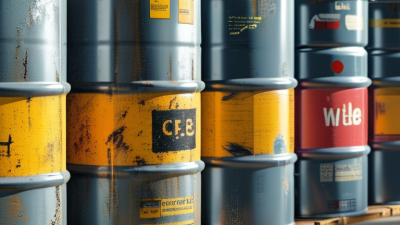
Packaging choices should match the chemical’s properties, route, and handling conditions. Check the product specification and safety data sheet before approving a container. A compatible liner, tight closure, and intact tamper seal help prevent leaks and contamination. Small details matter. For moisture-sensitive materials, ask how the supplier controls headspace and seals the package. Do not assume one container type suits every product.
Storage requirements vary. Confirm the permitted temperature range, light exposure, and shelf life for each material. Keep containers upright, secured, and separated where incompatibility is a concern. Use clear receiving labels and record lot numbers, arrival dates, and any visible damage. A temperature logger can help on sensitive routes, though it cannot replace proper storage after delivery. The exact limits should come from product documentation, not a general warehouse rule.
International shipping needs coordinated paperwork and handling. Verify the transport classification, packaging standard, labels, and destination-country requirements with qualified shipping staff before dispatch. Keep the invoice, packing list, safety documents, and product descriptions consistent. A recurring planning mistake is focusing on freight cost while overlooking the receiving site’s storage capacity. That can leave a carefully packed shipment waiting in the wrong conditions. It is worth checking the final-mile plan early, even when the route seems routine.
Checking Regulatory Compliance, Total Cost, and Long-Term Availability
For global buyers, regulatory compliance begins with the destination market and the chemical’s intended use. Check current local requirements before placing an order, not after the drums reach customs. Request a current safety data sheet, certificate of analysis, and lot-level traceability records. Confirm that labels, transport documents, and packaging match the shipment. Details matter. A document can be complete yet outdated, so verify revision dates and keep an approval record. Requirements can differ between sites, even within one country.
Price per kilogram rarely shows the full cost. Compare packaging, freight, insurance, storage conditions, incoming inspection, and disposal requirements. A lower-priced chemical may require tighter handling or create more rejected batches. Ask suppliers how they control moisture, particles, and contamination during filling and transport. Then consider the cost of a delayed production run. Procurement spreadsheets often miss that risk. I would revisit any comparison that excludes yield impact or qualification work.
Long-term availability depends on more than a supplier’s stated capacity. Review lead-time history, production locations, raw-material dependencies, and change-notification practices. Ask how shortages are communicated and whether safety stock is realistic for your usage. A second source can help, but only after technical qualification; switching is not instant. This is easy to underestimate. Forecasts also change, and buyers sometimes overstate certainty. Recheck assumptions with engineering and operations before committing to annual volumes.
Related Posts
-
7 Best Manufacturing Chemicals Suppliers for Global Buyers
-

What is Unique Chemical Solutions for Global Buyers?
-
2026 Top Unique Chemical Solutions That Will Revolutionize Industries?
-
How to Choose Industrial Chemical Packaging for Export?
-

Top 10 Industrial Chemistry Innovations Transforming China Today?
-

How to Gain Insights on Industrial Chemistry for Global Procurement?