
Careers

What Are the Best Chemical Manufacturers in China?
Choosing the best chemical manufacturers in China requires more than comparing production volume or export figures. The stronger question is whether a company delivers consistent quality, traceable materials, responsible operations, and reliable technical support. In chemical manufacturing, small process differences can affect color, purity, viscosity, yield, and customer safety. A reputable manufacturer should provide current certifications, batch records, testing methods, safety data sheets, and clear communication about production capacity.
Trevor Kletz, a respected process-safety pioneer, warned, “If you think safety is expensive, try ignorance.” His observation remains highly relevant when evaluating Chinese chemical suppliers. A modern facility may show clean floors, automated reactors, and polished laboratories, yet those details do not prove long-term reliability. Buyers should examine audit results, complaint handling, raw-material controls, wastewater practices, and the consistency of samples across several batches. Ask difficult questions.
This guide considers manufacturers through practical evidence rather than marketing language. It examines technical expertise, quality systems, research capability, delivery performance, and environmental responsibility. Experience matters too. A supplier that solves a crystallization problem at 2 a.m. may deserve more trust than one with impressive brochures. Still, no shortlist is perfect. Public information can be incomplete, and supplier performance may vary between sites. That limitation deserves attention. The following discussion therefore presents informed comparisons, not absolute judgments, helping readers identify manufacturers that fit their specific products, markets, compliance duties, and risk tolerance.
How China’s Chemical Manufacturing Industry Is Organized
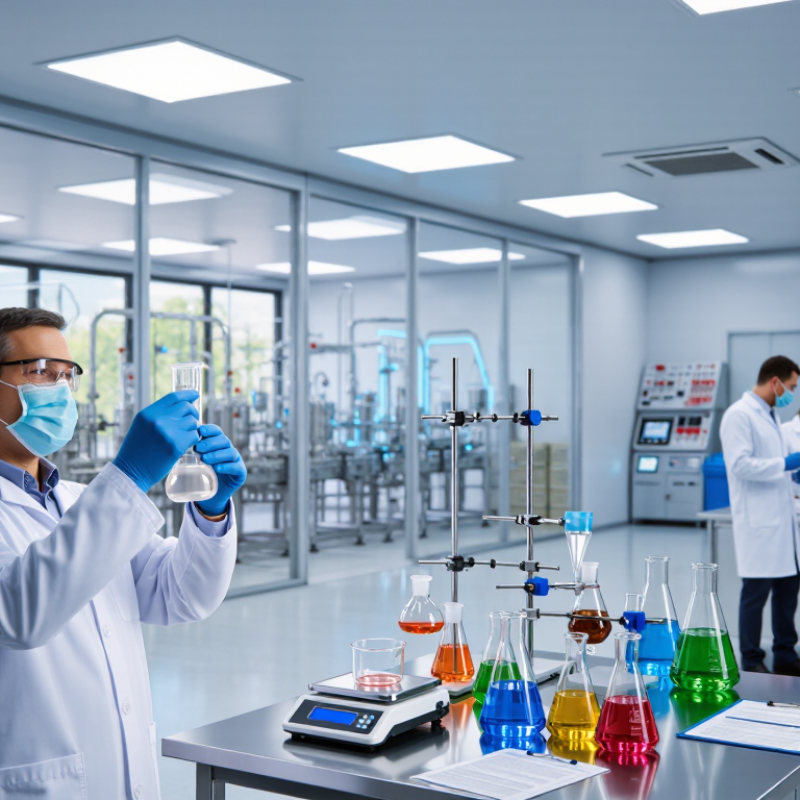
China’s chemical manufacturing industry is organized as a layered network, not a simple list of “best” companies. Large state-owned groups often support upstream feedstocks, including refining, natural gas, and basic chemicals. Private manufacturers are more active in intermediates, polymers, coatings, and specialty materials. Foreign-invested plants usually focus on advanced processes, quality systems, or regional supply chains.
Scale matters here. The China Petroleum and Chemical Industry Federation reported that the petroleum and chemical industry generated more than RMB 15 trillion in operating revenue in 2023. The National Bureau of Statistics also recorded strong growth in chemical raw-material manufacturing during parts of 2023 and 2024. These figures show industrial weight, but they do not prove uniform quality. That distinction is important.
Production is concentrated in coastal and inland clusters. Jiangsu, Zhejiang, Shandong, Guangdong, and Sichuan connect feedstocks, ports, laboratories, and skilled workers. A typical supply chain may begin with bulk chemicals, move through an intermediate plant, and finish at a specialized materials facility. Buyers should check plant certifications, batch traceability, wastewater controls, technical service, and export documentation. On-site audits still reveal details that brochures hide. Sometimes, performance data is incomplete. That is a risk worth admitting.
A practical evaluation should compare process stability, safety records, research capacity, and delivery reliability. The best-fit manufacturer may not be the largest producer. Industry organization explains why. Lower-tier suppliers can offer flexibility, while specialized facilities may provide tighter specifications and smaller production runs.、】【
| Industry Layer | Main Chemical Segment | Typical Products or Materials | Manufacturing Characteristics | Important Chinese Production Regions | Primary Reference |
|---|---|---|---|---|---|
| Upstream Feedstocks | Energy and mineral-based chemical raw materials | Crude-oil derivatives, natural-gas derivatives, coal-based chemical feedstocks, salt, sulfur, phosphate rock, and other industrial minerals | Capital-intensive operations with large continuous-process units, substantial utility requirements, and strong dependence on logistics and feedstock availability | Bohai Rim, northwest energy bases, Inner Mongolia, Ningxia, Xinjiang, Shanxi, and coastal refining corridors | Ministry of Ecology and Environment |
| Basic Inorganic Chemicals | Inorganic chemical raw materials | Acids, alkalis, industrial gases, chlor-alkali products, inorganic salts, and selected metal-based compounds | Supplies essential intermediates to fertilizers, polymers, electronics, construction materials, water treatment, and other industries | Coastal industrial belts, the Yangtze River Economic Belt, Shandong, Jiangsu, Zhejiang, Hubei, Sichuan, and Yunnan | National Bureau of Statistics of China |
| Basic Organic Chemicals | Organic chemical feedstocks and intermediates | Alcohols, ketones, aromatic compounds, olefins, organic acids, solvents, and other petrochemical intermediates | Often organized into integrated refining, petrochemical, coal-chemical, or gas-chemical chains to improve feedstock efficiency | Yangtze River Delta, Bohai Rim, Pearl River Delta, Fujian coastal areas, and large inland energy-chemical bases | Ministry of Industry and Information Technology |
| Fertilizer Chemicals | Nitrogen, phosphate, and potash-related products | Ammonia, urea, phosphate fertilizers, compound fertilizers, potash fertilizers, and fertilizer intermediates | Production is influenced by agricultural demand, natural-gas and coal costs, phosphate resources, energy policy, and seasonal logistics | Shandong, Hubei, Sichuan, Yunnan, Xinjiang, Inner Mongolia, and northeastern agricultural provinces | State Council of the People’s Republic of China |
| Synthetic Materials | Polymer materials and synthetic resins | Polyethylene, polypropylene, polyvinyl chloride, polystyrene, engineering plastics, synthetic fibers, and polymer modifiers | Combines large-scale commodity production with increasingly specialized grades for automotive, electronics, packaging, construction, and medical applications | Jiangsu, Zhejiang, Guangdong, Shandong, Fujian, Shanghai, and integrated petrochemical bases | MIIT Industrial Policy Resources |
| Specialty Chemicals | High-performance and application-specific chemicals | Electronic chemicals, coatings, adhesives, additives, catalysts, water-treatment chemicals, textile auxiliaries, and performance materials | More dependent on formulation expertise, process control, application testing, intellectual property, and customer qualification than on scale alone | Yangtze River Delta, Pearl River Delta, Beijing-Tianjin-Hebei, Shandong, Fujian, and selected high-tech industrial parks | MIIT Manufacturing Development Policies |
| Rubber and Plastics Processing | Downstream polymer and elastomer manufacturing | Plastic products, synthetic rubber products, films, pipes, packaging materials, molded components, and industrial rubber goods | More fragmented than upstream chemical production and closely connected with automotive, appliances, construction, packaging, and consumer-product supply chains | Guangdong, Zhejiang, Jiangsu, Shandong, Fujian, Anhui, and the Pearl River and Yangtze River Deltas | National Economic Industry Classification |
| Pharmaceutical and Agrochemical Inputs | Fine chemical intermediates for medicines and crop-protection products | Active pharmaceutical ingredients, pharmaceutical intermediates, pesticide technical materials, and formulation ingredients | Requires strict quality systems, environmental controls, traceability, process safety, and regulatory documentation; production is frequently concentrated in approved parks | Jiangsu, Zhejiang, Shandong, Hubei, Sichuan, Hebei, and other licensed chemical-industry zones | National Medical Products Administration |
| Industrial Gas and Process Services | Industrial gases and supporting chemical services | Oxygen, nitrogen, argon, hydrogen, carbon dioxide, specialty gases, laboratory chemicals, and chemical testing services | Supply may be delivered through pipelines, bulk transport, cylinders, or on-site generation; reliability and purity are critical for manufacturing customers | Major steel, semiconductor, electronics, petrochemical, and manufacturing clusters nationwide | State Administration for Market Regulation |
| Chemical Industrial Parks | Integrated production and infrastructure platforms | Shared utilities, wastewater treatment, hazardous-material logistics, storage, emergency response, testing, and public-service infrastructure | China’s chemical production is increasingly organized into designated parks with entry requirements, safety assessments, environmental controls, and centralized risk management | Coastal petrochemical bases, the Yangtze River Delta, Shandong, Ningbo-Zhoushan, Fujian, Guangdong, and selected inland bases | Ministry of Emergency Management |
| Regional Manufacturing Clusters | Bohai Rim | Petrochemicals, fertilizers, inorganic chemicals, synthetic materials, fine chemicals, and chemical equipment | Benefits from ports, energy infrastructure, research institutions, large industrial users, and established chemical logistics networks | Shandong, Tianjin, Liaoning, Hebei, and surrounding areas | National Development and Reform Commission |
| Regional Manufacturing Clusters | Yangtze River Delta | Petrochemical intermediates, polymers, electronic chemicals, coatings, additives, pharmaceutical intermediates, and specialty materials | Strong integration between chemical production, advanced manufacturing, ports, engineering services, research, and high-value downstream users | Shanghai, Jiangsu, Zhejiang, and Anhui | Yangtze River Economic Belt Information |
| Regional Manufacturing Clusters | Pearl River Delta | Specialty chemicals, coatings, adhesives, plastics processing, electronic materials, and consumer-product chemical inputs | Characterized by strong export orientation, dense electronics and manufacturing supply chains, and a comparatively high share of downstream applications | Guangdong, especially the manufacturing corridors around the Pearl River Estuary | Government of Guangdong Province |
| Regional Manufacturing Clusters | Inland Energy-Chemical Bases | Coal-based chemicals, natural-gas chemicals, fertilizers, chlor-alkali products, and basic intermediates | Built around local energy or mineral resources; production economics depend heavily on water availability, transportation, environmental capacity, and downstream conversion | Inner Mongolia, Ningxia, Xinjiang, Shanxi, Shaanxi, Sichuan, Chongqing, and Yunnan | National Development and Reform Commission |
| Regulatory and Compliance Layer | Safety, environmental, quality, and market supervision | Hazardous-chemical registration, environmental impact assessment, pollutant controls, work-safety licensing, product standards, and inspection | Manufacturers must manage multiple approval and compliance requirements covering plant design, construction, operation, transport, emissions, waste, and product quality | Requirements apply nationwide, with implementation handled by central and local authorities | Ministry of Emergency Management |
| Performance Evaluation Criteria | How chemical manufacturers are commonly assessed | Product consistency, regulatory compliance, process safety, environmental performance, delivery reliability, technical support, capacity scale, and total cost | The most suitable supplier depends on the application: commodity chemicals favor scale and logistics, while specialty chemicals favor qualification, formulation expertise, and technical service | Assessment should consider both the manufacturing site and the associated industrial-park infrastructure | International Organization for Standardization |
Related Posts
-
China Top Chemical Solutions Suppliers for Global Buyers?
-
China Top Chemical Manufacturers for Global Buyers
-
How to Optimize Chemical Processing for Efficiency and Safety?
-
Best Chemical Processing Solutions in China for Global Buyers?
-
China Best Chemical Chemicals for Industrial Applications?
-

How to Choose and Use High Purity Chemicals for Your Experiments